



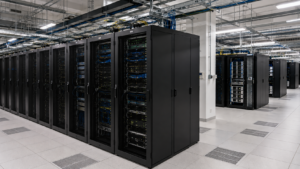
The Stargate Project came out as the largest AI infrastructure announcement ever made by a U.S. administration. Within its first few issuances, the Stargate Project was presented as both a powerful economic accelerator and a strategic response to global AI competition. It reflects the beginning of efforts to change where/how AI infrastructure is built in the USA. However, under the headline number, there is a more complicated story of execution. This article goes through how the Stargate Project was announced, its structure, & the hurdles it faces. It also glances at what a realistic delivery path looks like on the basis of confirmed actions.
Stargate Project Announcement
The phase of announcement put emphasis on scale, speed, & signaling intent instead of operational detail. So, this section goes through when the Stargate Project was unveiled, who formed the partnership, & more:
Official Unveiling Timeline
President Trump publicly unveiled the Stargate Project on January 20, 2025. It was presented as a public-private partnership to bring AI infrastructure to scale nationwide. Furthermore, the top-line number was $500 billion, with $100 billion presented as initial commitments from partners. The press coverage made it clear this was a phased investment, not a lump sum. The announcement was a signal to utilities, state governments, & vendors that large-scale AI infrastructure would come under federal visibility. What was left open was the pace at which commitments could turn into running data centers.
Core Partnership Framework
The organization of the Stargate project comes with a handful of anchor partners. OpenAI comes with AI deployment needs, SoftBank with financial support, Oracle with cloud/infrastructure solutions, & now MGX as an Investment Partner. These companies work together under Stargate LLC. It is a joint venture entity intended to grow as projects move forward. Furthermore, more suppliers will be needed to help with the purchase of the land, as well as the engineering and construction. This flexibility enables scale but also adds coordination challenges. This is across different risk, capital, & delivery timeframes aligned with AI infrastructure.
Stated National Security Goals
The Stargate Project was publicly associated with US leadership in AI and long-term US economic security. Officials were emphasizing the need for a significant expansion of domestic compute, rather than specific enforcement tools. Additionally, reports indicate there were no national security mandates that tied the purchase at the time. Rather, the strategy is to capitalize on the alignment of private investment and public priorities. So, this framing prevents early legal battles, but it makes the execution dependent on market forces and not regulatory authorities. This influences AI infrastructure timelines.
Equity and Debt Funding Sources
The financing for the Stargate Project is a mixture of partner equity and third-party debt. SoftBank has been openly talking about bringing in additional debt financing in addition to equity contributions. This is with capital being drawn in phases over several years. This structure truly reflects the financial realities. Furthermore, capital raising on this scale is going to require evidence of progress on land, power, & permits. Therefore, it’s likely that future rounds of funding will be milestone-based in construction rather than in anticipation of it, particularly for capital-heavy AI infrastructure construction.
The Stargate Project: Development Hurdles
Large AI infrastructure rarely slows down due to chips. The slowing down occurs due to land, coordination, power access, & more. So, this section goes through the Stargate Project challenges in the USA as progress moves from announcement to execution:
Site Selection Bottlenecks
Abilene, Texas, has emerged as a lead candidate city for the project. This places Stargate AI data centers in Texas at the heart of initial envisioning. Even so, site selection remains a limitation. Large campuses also require the availability of adequate land, long-term water rights, & transmission capacity proximally located. Negotiating land agreements & utility access takes time, even in supportive areas. So, these site-level issues show broad Stargate Project challenges in the USA, rather than unique failures of execution.
Permitting and Environmental Barriers
Permitting is a major obstacle for Stargate AI data centers in Texas and elsewhere. Furthermore, large facilities are subject to environmental review related to water usage, wetlands, & the grid structure. These processes often take years, regardless of political support. Federal alignment may facilitate coordination, but the statutory review requirements remain the same. For the Stargate Project, permit uncertainty has a direct impact on delivery timelines and capital sequencing. So, this is why AI infrastructure rarely moves as fast as announcements suggest.
Energy Supply Constraints
The single biggest constraint for the Stargate AI data centers in Texas is energy availability. Facilities of this magnitude are going to need long-term, sustained, heavy power loads – often in excess of one gigawatt. Grid operators are already under pressure to meet increasing demand, and federal energy projections indicate AI will be responsible for an increasingly large share of load growth. These pressures are driving Stargate to behind-the-meter generation, long-term power contracts, or transmission upgrades. All three are time-consuming, rendering energy one of the most critical Stargate Project problems in the USA.
Logistical Phasing Issues
Even when space and power are available, logistics slow down the rate of deployment. Deliveries of the GPU, cooling validation, and network integration take place in phases. SoftBank statements acknowledged rollout delays related to coordination among stakeholders. This is normal for hyperscale AI infrastructure. Additionally, phased deployment mitigates technical risk with the trade-off of longer schedules. As a result, early operating capacity comes on well ahead of full build-out. It also gives a realistic idea of what to expect from Stargate AI data centers in Texas.
Realistic Outlook on the Stargate Project
The pace of execution will show outcomes more than headline investment figures. So, this section goes through confirmed hardware commitments, realistic timelines, competitive pressure, & more:
Confirmed Hardware Commitments
Reports verify that NVIDIA will deliver approximately 64,000 GB200 GPUs to Stargate Texas facilities by 2026, at an initial deployment of 16,000 units. So, these commitments provide a foundation for Stargate AI data centers in Texas. This is because GPU density drives power, cooling, & networking design. Even so, this pace is a long way from what a $500 billion build-out would suggest. It indicates that the Stargate Project is growing incrementally, not in one massive surge.
Timeline and Scale Adjustments
Deployment progress represents a staged build-out, not a rapid scale-up. The Abilene site is operating at early capacity by the end of 2025, albeit with a small footprint. In contrast, some of the international Stargate Project sites, such as Norway, are moving even faster, with faster permits & plentiful hydroelectric power. So, this divide represents a systemic obstacle for the US Stargate Project, as regulatory hurdles and grid limitations continue to hinder the growth of domestic AI infrastructure.
Investor and Competitive Risks
Capital follows execution, not promises. Rival operations such as the xAI Colossus facility in Memphis raced ahead by making governance lightweight & deploying rapidly. Moreover, bringing resources online early provides real operating experience and a real market presence. In the case of the Stargate Project, where execution is slower, it allows rivals to build an early lead, even if Stargate’s total capital commitments are larger. Additionally, in AI infrastructure, investors measure success by the speed at which systems are made/run, not just by their ambition.
Policy and Execution Uncertainties
Several uncertainties are still outstanding in spite of political backing. There are no confirmed nuclear power commitments, no carve-outs for exports, & no guaranteed priority access to the grid. Moreover, interconnection queues in certain areas are longer than five years. These limitations could leave early capital stranded if power access falls behind. These threats characterize the long-term Stargate Project challenges in the USA and explain the project’s cautious, phased path.
Wrapping Up
The Stargate Project is the largest scale-up of AI infrastructure in the U.S. Its purpose is evident, and its initial commitments are tangible. But to work, it must overcome the practical obstacles of power, permitting, & delivery speed. The Stargate Project challenges in the USA are reflective of broader constraints on building large-scale AI infra today.
It’s these constraints that matter more than repeating headliners. For operators/utilities/policy makers similarly pressed, these lessons are vital. If you want to explore such subjects in depth with experts, come join us at the 4th U.S. Data Center Sustainability & Energy Efficiency Summit. It takes place in Dallas, TX, on Feb. 10-11, 2026.