

AI training demands are escalating quickly, and hyperscale cooling is the pressure point that is reshaping the built form of data centers. Operators wanted more power, but not such extreme thermal output. That shift is now rippling through decisions about real estate, financial assumptions, and campus configurations. In other words, the enclosure can no longer turn a blind eye to the cooling infrastructure it needs to accommodate. This piece goes into why the built environment needs to change to accommodate modern computing. It also covers how design decisions affect cost and site feasibility, and how developers are now viewing parcels through a cooling lens. This is instead of a power lens.
When AI Cooling Rewrites the Hyperscale Shell
Cooling has gone from an afterthought into a prime driver of shell geometry & campus selection. So, this section goes through how cooling reshapes design ratio & land use, and about the business consequences:
How AI rack densities overturn legacy power-cooling design ratios
Legacy enterprise halls are built to the tune of modest power densities. This changed with AI GPU clusters. Racks that used to draw a few kilowatts can now draw several times that, and that load has concentrated heat. So hyperscale cooling is no longer constrained by some old one-size-fits-all design ratios between power and airflow.
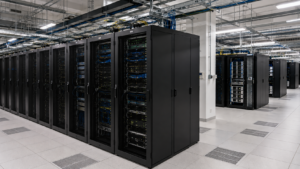
Operators should anticipate tighter coupling between the electrical and thermal systems. They need to design white space based on the cooling path. The mindset shift also places AI data center cooling on a pedestal in the earliest stages of planning. It compels builders to align MEP layouts with computing projections. It also raises the value of sites that can support intense thermal management.
Why cooling strategy now decide which campuses and parcels are even viable
Site selection was determined by power feeds and fiber. Now cooling joins that top tier. If a site can’t produce sufficient water or support dry coolers at scale, it may not be able to host dense GPU halls. Many fast-growing areas have scarce water rights and strict environmental regulations.
Those limitations make cooling AI hyperscale data center real estate constraints that investors cannot overlook. Meanwhile, the intense heat generation confines liquid-cooled data centers in facilities. This is with utility access and room for heat rejection gear. Consequently, land is scouted by developers not only for potential MW but also for heat and water feasibility.
The new trade space between MW per acre, height limits, and cooling topologies
Once upon a time, operators chased maximum MW per acre. It’s still a relevant metric, but cooling topologies and zoning rules have changed the trade space. Some jurisdictions have building height restrictions, which limit the amount of rooftop equipment. Other lots permit taller shells, which accommodate hybrid air and liquid solutions.
There are new hyperscale cooling trade-offs to be made in this environment around density, mechanical yard space, and locale code. It also drives a need for designs to be able to migrate from air-assisted to liquid-dominant modes. As a result, AI data center cooling adds another layer of due diligence. It often has more impact on the final build program than pure electrical capacity.
How cooling-driven redesigns flow into lease terms, white space pricing, and TCO
Landlords and operators are feeling pressure on the balance sheet. High-density tenants require stiffer floors, more pump power, more coolant, and more mechanical yard space. Those items alter capital budgets and the total cost of ownership. They also reshape lease terms because the shell may require upgrades mid-lease as densities increase.
This change brings about more transparent white space pricing linked to cooling capability, rather than just total square footage. With liquid-cooled data centers expanding, the mechanical side is moving into the revenue side of the business model. The tenants pay for the thermal headroom, and the owners provide flexible hyperscale cooling to bring in those loads.
How Water Rights and Resource Scarcity Now Decide Which Land Can Host AI Cooling
Water access now filters land for dense computing as many cooling systems require a steady supply, sewer capacity, & chemical compliance. So, this section goes through how water rights and resource limits form AI hyperscale data center cooling real estate constraints at the parcel stage:
Water rights that limit where tower-based hyperscale cooling can operate
Evaporative tower systems use water to dissipate large thermal loads. Hyperscale cooling facilities must obtain consumptive water rights or allocations before the start of any entitlement work. In the West and in some rapidly expanding metropolitan areas, those rights are tied to over-allocated river and groundwater basins. These already supply homes, farms, and industry.
Developers now vet parcels with water attorneys and hydrologists because robust power and fiber availability mean nothing if the site can’t secure a legal water source to cool its AI data centers. Cities won’t issue permits if the estimated make-up water demand will exceed what is allocated to the district, and thus, water contracts act as a land viability test for hyperscale cooling.
Seasonal allocation rules that change cooling capacity across the year
Water departments in dry states limit withdrawals in late summer when reservoirs and rivers reach seasonal lows, and those regulations limit cooling capacity because evaporative towers need a consistent supply of make-up water. Operators are now required to provide daily as well as monthly projections of usage rather than annual averages, and a parcel that gets approval in the winter can be denied in August as wet-bulb temperatures climb and allocations decline.
These seasonal limits make developers contemplate hybrid or dry rejection routes, and they shift siting logic in that consumptive water may not be taken for granted on a year-round basis. Accordingly, the value of parcels moves to basins that provide reliable access to high volumes of water, while stressed basins divert hyperscale cooling to liquid-cooling data centers with closed loops.
Wastewater discharge limits that force treatment yards and raise land requirements
The tower blowdown is made up of dissolved solids, corrosion inhibitors, and biocides, and the wastewater utilities manage the temperature, the chemistry, and the amount of discharge. Parcels lacking proximate sewer capacity must accommodate treatment pads, neutralization tanks, and sampling stations, and such facilities demand setback distances, truck ingress/egress, and spill containment areas that impact land form.
Utilities may also require seasonal discharge limits during periods of low river flow, which obliges operators to store, cool, or treat water on site rather than send it directly to the sewer. Those layers of regulations also affect real estate as they add to the land and capital planning needs, as well as introduce AI hyperscale data center cooling real estate constraints that cannot simply be worked around with a few more inches in design.
Groundwater protection rules that restrict chemical rooms and pipe routing
Zones of aquifer protection and groundwater districts have rules governing the placement of chemical rooms, pipe trenches, and tower pads, and inspectors mandate double containment, sealed floors, and drainage path controls to prevent groundwater contamination. Storage of chemicals may not be located adjacent to stormwater drains or permeable soils, and some districts have moratoriums on new tower installations where the risk of chemicals straying beyond district environmental guidelines.
These regulations alter the choice of parcels because industrial cooling systems had to fit within land overlays designed for manufacturing or food processing, not data centers. The consequence is an additional layer of AI hyperscale data center cooling-driven real estate constraints where groundwater overlays disqualify otherwise excellent parcels with sufficient power and fiber.
Column Grids, Slab Loads, and Structurally Aware Cooling Layouts
Structure & cooling interaction are now at the center of design. So, this part goes through how column grids/slab loads affect layout, and much more:
Choosing column grids that align with GPU pod layouts, CDUs, and manifold runs
AI infrastructure is beginning to adopt structural zoning, where grids are selected to accommodate separate compute, utility, and maintenance planes. Rather than just conforming to pod geometry, grids now also accommodate dual-circuit manifolds, differential elevation runs , and future coolants chemistries utilizing different pipe materials and sizes.
This is important because stainless, copper, and polymer tubing all have different bend radii, spacing of hangers, and requirements for seismic bracing, which can potentially clash with columns if spaced improperly. Grid decisions also affect the lift path for skids exchange, which hyperscalers schedule in the multi-year range. A grid prepared for equipment swaps never goes dark in a lifecycle refresh.
Engineering slab loads for CDU galleries, tank farms, and high-density wet loops
There is a trend of local thickening rather than full slab reinforcement in structural systems. Equipment developers are laying out equipment pads during early civil construction for potential future wet systems. But they don’t know the precise weight classifications. The benefit of that mindset is that one avoids designing full data halls for high-density coolant loops, which are “perhaps a decade too early.”
Floor flatness may become a new concern as well, with non-level slabs causing the tank to settle, skewing CDU skids, and stressing connections. In fact, some operators are now requiring flatness tolerances tighter than those for standard commercial buildings. Additionally, structural engineers are simulating thermal expansion of long coolant runs because of the sustained temperature swings, inducing anchor forces that must be absorbed at the slab interface.
Routing wet infrastructure to minimize leak exposure and structural risk zones
Some of the newer AI rooms are now experimenting with raised service catwalks for the wet systems so that technicians don’t service valves directly over live electrical aisles. That separates coolant work from compute incidents and reduces the scope of lockout/tagout.
Multi-level facilities are also employing sacrificial ceiling trays with built-in leak detection. This is so that one can catch a drip before it makes it to the floor slab. In strict containment code jurisdictions, designers are moving to closed-loop heat rejection with dry coolers. This minimizes the amount of wet routing inside the envelope. The path of travel is now based on overspray drift, external wind loads, and drain-down volumes under emergency depressurization, not only avoiding leaks.
Why “shell first, MEP later” fails for hyperscale cooling and how to reverse the sequence
Shell-first processes bypass the permitting and entitlement schedules associated with cooling technology selections. For example, tower-based rejection is subject to environmental review for drift, plume, and noise, but dry coolers induce electrical and roof load assessments. When the shell is already permitted, changing cooling methods midstream can re-trigger regulatory review or render prior submittals void.
Inverting the order lets developers lock cooling architecture prior to civil drawings going out to planning regulators. Thisshortens overall delivery. Another advantage is capital sequencing. Operators can determine the size of utility yards, pipe bridges, and access corridors in advance of committing to the shell. Thus, it facilitates the parallel procurement of long-lead MEP gear rather than waiting for the shell to be.
To Sum Up
AI pushed thermal loads into uncharted territory, and hyperscale cooling transformed from a mechanical detail to a real estate driver. This trend ties power, water, and shell geometry into a cohesive whole. It also allows cooling to have consideration during land screening and lease negotiations. Teams that design for structure, height, and routing gain agility and improved economics. They also decrease lifecycle risk and simplify future upgrades.
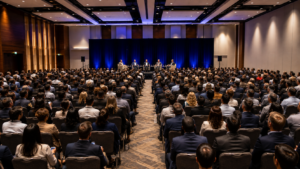
If you are interested in seeing how the leading companies in the industry are addressing these challenges, then we encourage you to participate in the 5th Data Center Design, Engineering & Construction Summit in Dallas, TX, on 10-11th February 2026, and learn how hyperscale cooling is transforming the built environment for the better.