

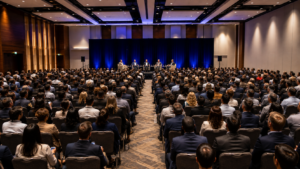
The 5th Data Center Design, Engineering & Construction Summit was held at a pivotal point in the industry. At the moment, the need for data is growing at an unprecedented pace. Businesses are going after bigger sites while trying to be in line with sustainable goals. This event brought together experts to discuss these significant challenges. It was the perfect moment to share ideas on how to build faster and smarter. This article covers the main lessons from the expert speakers. It also highlights the key companies that supported the event. You will learn about new designs and the future of data centers.
Sessions – 5th Data Center Design, Engineering & Construction Summit
The presentations at the 5th Data Center Design, Engineering & Construction Summit were concentrated on the most important trends in the market at present. Technical design, power management, and the effects of AI on construction are discussed in this section:
Scaling Data Centers: Standards, Structure, Delivery: Bridging the Gap Between Global Standards and Local Execution
Speaker: Jasmeet Singh, Senior DC Design Manager at Amazon Web Services
The speaker discussed how to balance global design rules with local building needs. It is important to keep a consistent style across many sites while following local laws and safety codes. Furthermore, the speaker explained that structural engineering helps lead the team to prevent expensive mistakes later. By coordinating early, teams can build complex and reliable facilities very quickly. This approach uses performance-based design to make sure the buildings can handle heavy use. Additionally, working together across different departments is the best way to deliver these large projects on time in a fast-paced market.
Mega Scale / Mega Speed – The AI arms race to build and operate massive new deployments
Speaker: Jeff Ivey, VP Data Construction at Crusoe
The speaker focused on how AI is changing the way we think about data center size and speed. Because AI needs so much power, construction timelines must get much faster. The speaker suggested using modular and prefabricated parts to speed up the building process. It is also vital to manage extreme heat and high power needs with new cooling ideas. Using AI to monitor the buildings can help keep them running without any breaks. Moreover, the speaker noted that we must plan today for the massive computing demands that are coming in the future.
GRID-FREE POWER. ALWAYS ON. Independent Power for Data Centers
Speaker: Theo Lorentzos, VP Sales – Americas at Langley
The speaker addressed the issue of the electricity grid struggling to keep pace with demand. When the grid is too sluggish, firms must find alternative means of obtaining electricity. Innovation becomes very important when a facility needs to stay on all the time. The speaker talked about independent power solutions that work even when the local grid fails. So, this helps data centers stay active without waiting for outside help. Having a reliable and private power source is a major advantage. It ensures that mission-critical work never stops because of a power shortage.
Infrastructure Frontiers Power Grids: Building Data Centers for the AI Market
Speaker: Iman Khosravi, Head of Sales & Marketing at Linxon
The speaker highlighted the massive delays companies face when trying to get power from the grid. Some sites have to wait ten years for a connection, which leads to the “Bring Your Own Generation” trend. There is a mismatch between what the infrastructure can do and what the market needs. The speaker also mentioned that shortages of materials and high taxes on imports are causing trouble. On top of that, there is a gap in finding skilled workers to build these systems. These challenges require new ways of thinking about how we market and sell infrastructure.
High-Density Cooling for a Sustainable World
Speaker: Dustin Cohick, Market Leader – Americas Data Center at BAC
The speaker at the 5th Data Center Design, Engineering & Construction Summit introduced different ways to keep data centers cool while being sustainable. There are means of heat rejection from both the interior and exterior of the building. The appropriate cooling method is site-specific and depends on the local environmental conditions. Furthermore, the speaker described how trade-off decisions can be made to optimize. Using the right technology helps the facility run efficiently without wasting resources. This focus on cooling is essential because servers are becoming much denser and hotter. Finding the right fit for each location is the key to success.
Critical role RF and acoustic door assemblies play in data center design & construction
Speaker: Maroun Beaino, Product Development Engineer at AMBICO Limited
The speaker talked about the importance of special doors in data center design. These doors help block radio frequencies and loud noises, which keep the equipment safe and quiet. Moreover, the speaker shared real-world examples of how these doors are used and the common design challenges they solve. Attendees learned about the features needed to follow safety and performance standards. Whether building a new site or fixing an old one, these doors are a critical part of the plan. The speaker provided practical tips to help create a secure and robust environment for all data.
Designing for Impact: Driving Climate Neutral and Net Positive Water Strategies in Global Data Centers
Speakers: Renee LaManna, Sustainability Manager at CyrusOne, and Heather Schrock, Director, Environmental Partnerships at Bonneville Environmental Foundation
The speaker explained a roadmap to make data centers climate-neutral by the year 2030. This plan involves using new designs and global teamwork to lower carbon levels. The speaker emphasized using data to track environmental impact and being open about the results. It is important to use the same green strategies in both the United States and Europe. Sustainability should be a core principle from the very start of a project. So, this means picking the right site and planning the construction carefully. The goal is to save water and help the planet while growing.
Fueling Data Center Builds: Turning Construction Fuel into a Strategic Advantage
Speaker: Alan Apthorp, Senior Manager of Business Development at Mansfield
The speaker discussed how managing fuel during construction can be a big advantage. It is important to know what matters most when buying and using fuel for a big project. There is a high cost to ignoring fuel management, as it can lead to waste and delays. Moreover, the speaker shared special fuel solutions that are made just for the needs of data centers. By having a good plan, companies can save money and keep their machines running smoothly. Proper fuel strategy is a hidden but vital part of building a successful and efficient facility.
The Missing Link – How Workforce Housing Derisks Remote Data Center Builds
Speaker: Judson Greif, Vice President of Strategic Partnerships at Target Hyper/Scale
The speaker at the 5th Data Center Design, Engineering & Construction Summit explained how housing for workers can reduce risks when building in remote areas. Often, data centers are built far away from cities where there are not enough places for people to live. If workers have a good place to stay, it is easier to finish the project on time. Additionally, the speaker talked about how building these “workforce hubs” helps attract the best talent. This housing makes the job more stable and keeps the construction moving forward. Providing a place to live is a strategic move that helps big projects succeed in difficult locations.
PANEL DISCUSSION
Accelerating Data Center Delivery: Rethinking How We Build at Scale
Moderator: James Cordeiro, Director, Strategic Development at Silverback Concrete
Speakers: Nicolas Rbeiz, Principal at Microsoft, Frank Stankunas, President at Silverback Concrete, and Greg Giraldo, Director of Engineering (AMER) at Amazon Web Services
The panel looked at new ways to build large facilities faster. They discussed how to rethink the entire construction process to handle the massive scale of modern data. The conversation focused on strategy and performance to make sure every step is efficient. By working together, the team can find ways to avoid delays in the supply chain. The speaker noted that speed is important, but quality must remain high. Sharing experiences from major companies helps everyone learn how to deliver these projects more reliably. So, this session encouraged a fresh look at old building habits.
Beyond the Grid – Powering the Next-Gen Data Center
Speaker: James Cordeiro, Director, Strategic Development at Silverback Concrete
The speaker at the 5th Data Center Design, Engineering & Construction Summit shared how new concrete technology can help save a lot of energy. By using a special type of thermal concrete for underground wire systems, developers can boost efficiency by 10%. This starts from the very beginning of the building process at the ground level. The speaker explained that better heat management leads to a more reliable grid and long-term savings. Furthermore, this session challenged the usual way of thinking about construction materials. Smarter choices in the dirt and the foundations can lead to big changes in how much power a facility uses over time.
Identifying, measuring & managing materials & processes to reduce the carbon footprint
Speaker: Forest Halualani, Lead, Sustainability Program at Compass Datacenter
The speaker talked about finding and measuring materials that have a low carbon footprint. It is important to use materials that do not hurt the environment during the building phase. Moreover, the speaker compared building on-site to using pre-made parts to see which is greener. It is not enough to just look at basic stats; companies must accurately measure their real impact. By using design principles that focus on both cost and energy, builders can meet their goals. The speaker stressed that sustainability efforts must be real and effective to make a true difference.
PANEL DISCUSSION
Labor challenges of remote data center construction
Moderator: James Cordeiro, Director, Strategic Development at Silverback Concrete
Speakers: Judson Greif, VP at Target Hyper/Scale, Daniel Roth, Principal Data Center MGMT at AT&T, and Taylor Slack, Sr. Construction Manager at Crusoe
The panel at the 5th Data Center Design, Engineering & Construction Summit discussed the hard task of finding labor for remote construction sites. When a data center is built far away, it is tough to get enough skilled workers to move there. Moreover, the group shared ideas on how to manage these teams and keep them happy. They talked about the challenges of managing large projects in places with very few local resources. By planning ahead for labor needs, companies can avoid stopping work. This session highlighted that the people building the data center are just as important as the technology inside it.
Designing green data centers around power availability constraints and AI-driven energy demand
Speaker: John Belizaire, CEO at Soluna Holdings
The speaker explained how to build the next generation of green data centers to keep up with AI. Since AI needs so much energy, the infrastructure must be aware of how the power grid works. Additionally, the speaker shared real examples of how green data centers are working right now. These facilities help keep the power grid stable while also meeting climate goals. Designing with the environment in mind is the only way to support the huge energy needs of the future. The speaker showed that sustainability and high-tech progress can happen at the same time.
FIRESIDE CHAT
Scaling Fast, Thinking Long-Term: A Fireside Chat on Data Center Sustainability
Speaker: Namrata Gupta, Sustainability Manager at Vantage Data Centers
The speaker sat down for a deep talk about how to grow quickly without hurting the planet. It is often hard to balance the need for speed with the goal of being sustainable over many years. Furthermore, the speaker shared insights into how large companies make these tough decisions every day. Thinking long-term means looking at the environmental impact of every part of the building. Even when a project is moving fast, the team must stay focused on green targets. This chat provided a look into the mindset needed to lead in a green way.
Future-proofing data centres: Adapting for high-density computing and resilience
Speaker: Tom Felix, Head of Design Engineering – North America at Digital Reality
The speaker discussed how to make buildings ready for the high-density servers of the future. This involves using new design strategies that can handle very heavy workloads. It is important to balance what the facility needs right now with what laws might require in the future. Moreover, the speaker explained how to integrate server clusters that use a lot of power for AI. Also, having a good plan for disasters and keeping the business running is vital. The speaker emphasized that a good design must be able to change as technology evolves.
Design Day & Failing External CFDs: Minimizing overbuild and maximizing infrastructure utilization
Speaker: Paul Heapy, Vice President – Mission Critical at Peak+
The speaker examined the common assumptions people make when they plan a data center’s peak cooling needs. Sometimes these plans are too big, which leads to wasting money and resources. Moreover, the speaker explored “peak shaving” as a way to use power and cooling systems more effectively. This helps reduce initial costs while making the infrastructure work harder when it is needed. By fixing issues with air flow and cooling early on, builders can avoid big problems later. The speaker showed how to get the most out of every piece of equipment on the site.
Transforming data centre scalability: The future of modular and prefabricated designs
Speaker: Chris Straley, Senior Product Development Director at CoreSite
The speaker at the 5th Data Center Design, Engineering & Construction Summit highlighted how modular and prefabricated designs are the future of building quickly. Using the same design over and over helps keep everything consistent and easy to manage. Moreover, the speaker analyzed how these methods save money and use resources more wisely. There have been many advances in making electrical and mechanical parts in a factory before they arrive at the site. The speaker also discussed how to protect equipment with better airflow and cooling systems. Using pre-made modular units offers many benefits for companies that need to grow their capacity very fast.
Navigating the Sustainability–Reliability Paradox in Data Center Strategy
Speaker: Matt Stansberry, Vice President, Data Center at Uptime Institute
The speaker discussed the conflict between making a site reliable and making it sustainable. Often, having extra backup systems to ensure reliability can lead to more waste. Additionally, the speaker defined what these terms mean in the modern world of data centers. They looked at how new cloud models are changing how we think about accountability and efficiency. Choosing where to invest money in infrastructure involves making difficult trade-offs. The speaker provided a guide for how to make these decisions without losing focus on either safety or the environment.
CLOSING PANEL DISCUSSION
Bridging the supply-demand gap to evaluate your data center expansion strategy
Moderator: James Cordeiro;
Speakers: Dave Young, SVP of Operations at Dartpoints, and Ramiro Martinez, PE, AVP Data Center at AT&T
The panel at the 5th Data Center Design, Engineering & Construction Summit finished the event by talking about how to plan for future expansion. There is a large gap between how much space is needed and what is currently available. Furthermore, the group evaluated different strategies for growing a data center portfolio in a crowded market. They discussed the practical steps needed to find more power and land for new buildings. By looking at the current supply chain, they offered advice on how to stay ahead of competitors. This closing talk helped attendees understand how to turn the summit’s lessons into a real plan.

Who were the sponsors for the 5th Data Center Design, Engineering & Construction Summit
The support from these organizations was essential for bringing this event to life. This section describes the companies and the specialized services they provide to the global data center market:
Langley Holdings plc – Platinum Sponsor
Langley Holdings plc is a family-owned global group with over 5,000 employees. They make about $1.5 billion in sales every year. Their power division combines Bergen Engines (formerly Rolls-Royce Bergen Engines), Marelli Motori, and Piller Power Systems to provide modular electricity systems. These systems can provide up to 500MW of power directly at the site. They are designed for large AI and hyperscale facilities where the local grid might be delayed. Furthermore, the company helps solve energy problems by providing reliable and scalable solutions. Moreover, they are experts in making sure large buildings have the power they need to stay online.
NUPI INDUSTRIE – Premier Networking Sponsor
NUPI INDUSTRIE has been around for over 50 years and focuses on advanced pipe systems. They make pipes for plumbing, heating, and fuel using modern materials. They have seven factories around the world and have installed their systems in 145 different countries. This global reach means they can support projects almost anywhere on earth. Moreover, their pipes are known for being reliable and are a great fit for data center cooling and water systems. They also provide a complete solution for all the pipework needs a large facility might have during construction.
Target Hyper/Scale – Gold Sponsor
Target Hyper/Scale is part of a large hospitality company that provides remote housing. They focus on building and running hubs where construction workers can live while they work. This is very helpful for data center owners who need to find and keep skilled workers in remote spots. Furthermore, they handle everything from finding the land and designing the buildings to running the daily services. Their goal is to solve the unique staffing challenges of the technology sector. Additionally, they make sure that the people building the data center have a great place to stay and eat.
Silverback Concrete – Gold Sponsor
Silverback Concrete is a family-led team that focuses on heavy concrete work. They build strong structures for contractors who want the highest quality possible. They believe in delivering strength because they care deeply about every building they work on. Their motto is that while you stand on the concrete, they stand by their work and have your back. Moreover, they focus on providing stability to the buildings they help create. For them, concrete is the tool they use to ensure a project is built to last for many decades.
Linxon – Silver Sponsor
Linxon provides complete engineering and construction solutions for power systems. They design and build substations that give reliable and efficient electricity to large data centers. They are experts in high-voltage systems that keep the power grid stable. Their work ensures that energy flows correctly even when the servers are doing very heavy work. Additionally, they handle everything from the initial engineering to the final construction. By using advanced technology, they help their clients meet high-performance and sustainability goals. They are a key partner for building mission-critical power infrastructure.
Mansfield Energy – Silver Sponsor
This family-owned business has been operating since 1957 across North America. They manage over 3 billion gallons of fuel every year through a very large distribution network. Mansfield Energy serves more than 8,000 customers and delivers fuel, additives, and green energy solutions. They are experts in helping businesses reach their environmental goals through smart planning. For data centers, they help switch backup generators to renewable diesel, which lowers emissions. Moreover, they act as a one-stop partner for managing fuel and improving the way a company handles its energy needs.
BAC – Bronze Sponsor
BAC has been a global leader in cooling since 1938. They create sustainable solutions for cooling and refrigeration in the most demanding places on earth. They were pioneers in making special condensers and now lead the way in immersion cooling tanks. Their goal is to move cooling technology forward and help their partners succeed. Furthermore, they pride themselves on being a partner that people can trust for essential cooling needs. They are always looking to start new conversations about how to make cooling systems better and more efficient.
AMBICO Limited – Bronze Sponsor
This global manufacturer makes high-performance doors and windows for critical buildings. Their products are engineered to protect infrastructure and keep sites running without interruption. AMBICO Limited offers doors that block sound, radio frequencies, and even blasts or security threats. All of their special radio frequency doors meet very high standards to stop signal leaks. They work closely with project teams to make sure these doors fit the design of the building. Additionally, their assemblies are used in the most demanding data center facilities around the world to keep information safe.
Peak+ – Presenting Partner
Peak+ uses special precooling technology to help data centers stay cool more efficiently. Their system cools the air before it enters the machines, which reduces the workload on the equipment. This is especially helpful during very hot weather when cooling systems usually struggle. Furthermore, their technology helps unlock extra capacity and makes the design more reliable. They use advanced controls to make sure they use as little water as possible. This makes them a vital partner for anyone looking to build a reliable and energy-efficient data center.
Invicta Technologies – Exhibiting Partner
This company uses innovative technology to help make construction projects more certain. Invicta Technologies uses 3D modeling and robots to make sure buildings are built correctly the first time. This saves money and helps finish the project faster by reducing the need to fix mistakes. They specialize in scanning sites and creating designs that do not have parts clashing with each other. Moreover, their team works around the clock in the United States to support project managers. They are dedicated to redefining how construction works by using the best digital tools available today.
Lindsay Precast – Exhibiting Partner
Lindsay Precast is a leader in precast concrete and has over 60 years of experience. They provide strong and reliable solutions for utilities, transportation, and energy markets. Because they have a large production capacity, they can meet very tight schedules for big projects. They make many different products, such as utility vaults and communication boxes, in their own factories. So, this helps builders save time and reduces the cost of labor on the site. Their focus is on providing durable concrete parts that help a project stay on track.
ALICE Technologies – Exhibiting Partner
ALICE Technologies created the first platform that uses AI to optimize construction schedules. It was founded in 2015 based on research from Stanford University. The software helps large contractors find the fastest and safest path to finish their projects. By using AI, they can reduce the risks of delays and help recover if a project falls behind. They work with some of the biggest construction customers in the world. Moreover, their goal is to make capital projects more efficient by using the power of modern computer science and data.
Xylem – Exhibiting Partner
This global water technology leader is committed to making data centers more sustainable. Since cooling can use millions of gallons of water, they focus on making water use more efficient. Xylem provides many different solutions, from water treatment and filtration to digital monitoring. Their goal is to help operators reduce downtime and meet environmental laws. They partner with customers to build a world where water is safe and used wisely. Additionally, their work helps businesses have a positive impact on their local communities while running their facilities.
Data Center Construction Alliance – Exhibiting Partner
Data Center Construction Alliance brings together experts in rigging, project management, and logistics. It combines the skills of people who move heavy gear with experts who manage the supply chain. They create a smooth process for managing and installing the most important data center equipment. By working together, they make sure that mission-critical gear gets to the site and is set up correctly. Furthermore, this partnership helps solve the complex problems that come with building high-tech facilities. They provide an end-to-end solution that makes the construction process much easier for the owner.
Evercam – Exhibiting Partner
Evercam leads the way in using cameras and drones to track construction progress. Their platform unifies video and images from different sources into one single record of the site. Project teams use this information to verify that work is being done on time. It also helps resolve disputes by showing exactly what happened on the site each day. They use AI to turn images into useful information for managers. They operate in many different countries and help replace manual reports with real visual evidence of how the building is going.
Locke – Coffee Break Sponsorship
This leading manufacturer makes custom precast concrete for utilities and data centers. They have facilities in Texas and other locations to provide durable and dependable products. Locke makes items like manholes, trenches, and electrical vaults that are tailored to each project’s needs. Moreover, the company is committed to high quality and great service for every customer. They don’t just build concrete parts; they focus on building solutions that will last a long time. Their presence at the event helped show how important basic infrastructure is to the high-tech world.
To Sum Up
The 5th Data Center Design, Engineering & Construction Summit was a great success. It showed that the industry is ready to face new challenges with better technology and smarter plans. Everyone learned how important it is to balance growth with being green. The experts and sponsors shared many ways to make data centers faster, stronger, and more efficient. As the world needs more data, these lessons will become even more valuable. To keep learning and stay ahead in this industry, you should attend more such sustainability summits in the future.