


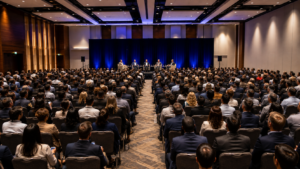
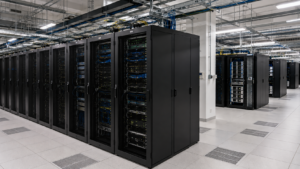
Data centers face a simple problem that keeps getting harder: they need more power, but getting that power takes time. The 8th Time-to-Power & Capacity for Data Centers Summit brought that challenge into focus in Dallas on 18–19 August 2026. AI growth, grid queues, permitting delays and rising capacity needs all put pressure on new projects. The programme therefore looked beyond the grid connection itself. It explored onsite generation, batteries, cybersecurity, AI load planning and other practical ways to bring power to data centers faster.
Exploring the road to faster power
The discussions covered different parts of the same problem. How can developers find suitable power markets? How can they avoid delivery delays? And what happens when AI workloads change faster than infrastructure plans?
Day one
Grid Under Pressure: Managing Data Center Growth and Capacity Constraints in High-Demand Power Markets
José RODRÍGUEZ – Chief Operating Officer, New Era Energy & Digital
Finding power is no longer just about finding a suitable site. This session looked at ERCOT, PJM and MISO through the lens of time-to-power and long-term scalability. It also examined who pays for the substation when infrastructure financing falls short. Meanwhile, the discussion considered the trade-offs between congested Tier 1 markets and secondary or tertiary regions.
How We Secured Power for a Large Data Center Project: Timeline, Bottlenecks and Lessons
Speaker not specified in the programme
This session focused on what actually happens when a large data center project needs power. The discussion compared planned and actual energisation milestones. It also looked at transmission limits, transformer lead times, utility queues and permitting delays. More importantly, it highlighted coordination between utilities, EPCs, grid operators and data centers. Developers, hyperscalers and colocation providers could apply those lessons.
The Devices Between You and Downtime
Joel GOINS – Director – Technical Account Manager, DRAGOS
A data center relies on far more connected equipment than its IT teams may realise. This session looked at UPS systems, PDUs, cooling equipment, BACnet controllers, rack monitors, cameras and access controls. It also examined five areas of device security: asset inventory, credentials, firmware, configuration and end-of-life risk. For example, one major data center network achieved complete xIoT discovery in about 12 minutes.
From Grid Consumer to Regulated Entity: The Compliance Horizon for Data Centers
Markus MUELLER – Field CISO, Nozomi Networks
Data centers are becoming major participants in power systems. That shift could bring greater regulatory oversight. The session used FERC, NERC and NIS2 as examples of where data center compliance could head. It also separated today’s requirements from future expectations. At the same time, the discussion stressed stronger visibility, cybersecurity and operational controls. Companies that prepare early can avoid expensive retrofits driven by future audits.
Solving Time to Power: Soluna’s Approach to Accelerating Data Center Interconnection
Nick LANCASTER – VP of Engineering, Soluna Holdings
AI computing continues to put pressure on available power. This session examined how data center design and Soluna’s behind-the-meter model can shorten the route to power. It also drew on lessons from Projects Dorothy and Kati. In practice, the discussion connected the wider power bottleneck with specific approaches to interconnection. It gave developers another way to think about how project design can affect delivery timelines.
Bringing Connectivity Risks in Data Center Facilities to the Surface
Sean IR – Director of Product Marketing, Claroty
Connectivity creates another risk that data center operators cannot ignore. This session examined how attackers can target the operational backbone of a facility. It also looked at the visibility gaps that leave assets exposed. From there, the discussion moved toward network resilience and auditable compliance. The focus stayed practical. Operators need to know what connects to their infrastructure before they can properly understand the risks around those connections.
Load Flexibility Using BESS
Uzair BAIG – Head of Power Strategy, Iron Mountain
Battery storage can do more than provide backup power. This session explored how behind-the-meter BESS can turn large data center loads into more flexible grid assets. The discussion used Iron Mountain’s Edison, New Jersey facility as a case study. The site features a 12MW BESS and a large rooftop solar array. It also demonstrated tariff neutrality and opportunities to capture transmission, capacity, and ancillary-market value through the PJM value stack.
The deteriorating PR situation for building new data centres in the US
Giovanni CAPRIGLIONE – Texas State Representative HD98, Texas House of Representatives
Power availability does not settle every challenge around a new data center. Communities also want to know what a project brings to the area. This session suggested leading with quantified community benefits instead of corporate defence. It also called for formal industry coalitions and early publication of hard data. In addition, it recommended using a trusted Texas spokesperson who can speak credibly to local communities.
Planning for the Unknown: Power Forecasting in the Age of AI Volatility
Nick LANCASTER – VP of Engineering, Soluna Holdings
Ramiro MARTINEZ, PE – AVP Data Center Operations, AT&T
Lee BRATCHER – Head of Policy and Government Affairs, Cipher Digital
Sharmila BOKKA – Senior Electrical Engineer, Crusoe
MODERATOR: José RODRÍGUEZ – Chief Operating Officer, New Era Energy & Digital
AI workloads can change power requirements quickly. The panel examined unpredictable spikes from AI training clusters and the risk of stranded capacity. It also considered the problems that come with overbuilding or underbuilding infrastructure. As a result, the discussion focused on dynamic load management. It also stressed closer alignment between infrastructure planning and AI deployment cycles.
Day two
Time-to-Power: When the AI and Energy Dilemma Becomes a Geology Imperative
Fernando C. HERNANDEZ – Chairman of the Board, Society for Low Carbon Technologies
The second day opened with an unusual question: could geology help solve the time-to-power problem? The session pointed to several examples. Oracle has explored natural gas fuel cells, while Meta’s agreement with XGS Energy reflects growing interest in geothermal power. Deep Fission also entered the discussion. Meanwhile, Google aims to combine natural gas with carbon capture and storage to produce lower-carbon power for data centers.
Overcoming Delivery Bottlenecks Across the Data Center Ecosystem
Markus MUELLER – Field CISO, Nozomi Networks
Rajesh GOPINATH – Data Center Power Systems Engineering, Oracle
MODERATOR: Marc LALIBERTE – Principal, Special Projects, Continent 8 Technologies
Getting power available does not automatically mean a project can move ahead. This fireside chat looked at the bottlenecks that still slow data center delivery. It asked where utilities, developers, engineers, and EPCs can align earlier. It also considered whether EPC capacity has become as significant as power availability. Finally, the discussion looked at practical strategies that could help teams accelerate project delivery.
Accelerating Speed-to-Power: Standardizing AI Data Center Power Delivery Model
Scott YAPPEN – Senior Business Development Manager, Wärtsilä
Co-presenters: Sherif AbuSalem – Business Development Leader, Schneider Electric; Tom Mergen – Vice President and Growth Leader, Stanley Consultants
AI data centers can face grid interconnection delays of up to eight years. This session explored a standardised delivery model that combines power generation, electrical distribution and engineering. The model aims to improve speed-to-power, reliability and bankability. It also seeks stronger community acceptance. In turn, standardised partner delivery, pre-integrated equipment and repeatable execution could give developers a more consistent way to approach large AI projects.
Fireside Chat
Fernando C. HERNANDEZ – Chairman of the Board, Society for Low Carbon Technologies
MODERATOR: Marc LALIBERTE – Principal, Special Projects, Continent 8 Technologies
The programme included a fireside chat between Fernando C. Hernandez and Marc Laliberte. However, the event material does not provide a separate title or description for this discussion. Rather than add assumptions, the programme only identifies the format, participants, and their roles. The available material supports the speaker information, but it does not provide enough detail to describe the conversation itself.
Accelerating Time to Power: Sapphire Gas Solutions brings you natural gas-backed power and solutions without the wait
Jay SMITH – Executive Vice President of Business Development & Corporate Strategy, Sapphire Gas Solutions
Natural gas can offer another route when traditional grid access takes too long. This session introduced Sapphire Gas Solutions and its model for bringing natural gas to digital infrastructure projects, regardless of existing pipeline access. The approach supports projects from their initial power requirements through long-term expansion. In particular, the discussion showed how gas supply can form part of a wider strategy for getting power to digital infrastructure without waiting for conventional pipeline access.
Designing Ahead of the GPU Roadmap: Electrical Infrastructure That Scales With AI Load Density
Sharmila BOKKA – Senior Electrical Engineer, Crusoe
AI workloads do not behave like conventional data center loads. That difference can change almost every upstream power decision. This session looked at how poor load characterisation can lead to incorrect equipment specifications and costly change orders. It also examined battery storage as a load-driven design requirement. Beyond that, the discussion covered the challenges of combining on-site generation, storage and grid supply. The aim was to prevent today’s infrastructure from becoming tomorrow’s constraint.
The True Cost of Power: Pricing, Reliability Risk, and Market Design in Scarcity Conditions
Rajesh GOPINATH – Data Center Power Systems Engineering, Oracle
Uzair BAIG – Head of Power Strategy, Iron Mountain
Matthew FRANCIS – Construction Manager, Hoffman Construction Company
MODERATOR: Markus MUELLER – Field CISO, Nozomi Networks
Fast access to power can come at a price. This panel examined how capacity constraints affect PPA pricing and long-term power costs. It also looked at the choice between paying for speed and paying for certainty. Meanwhile, the discussion considered curtailment, congestion pricing and reliability events across different ISOs. These factors can influence site selection and investment decisions, especially when developers compare power options in scarce markets.
The organisations behind the event
The partner group reflected the range of systems that data centers need as they expand. Some focus on cybersecurity. Others work on transformers, power conversion, on-site generation, or energy management. Together, they cover several practical pieces of the power and infrastructure puzzle.
Nozomi Networks – Bronze Sponsor
Nozomi Networks focuses on OT and IoT security for critical infrastructure. Its platform brings together network and endpoint visibility, threat detection and AI-powered analysis. The company also provides real-time asset visibility and actionable intelligence for operators managing complex environments. At the summit, that focus connected directly with data center resilience. As more equipment links operational systems with IT and IoT environments, visibility becomes important. Nozomi’s offering helps organisations identify assets, detect threats and respond to incidents. The company supports operators that need better security without losing sight of operational continuity and reliability.
Claroty – Bronze Sponsor
Claroty works to secure cyber-physical systems and help operators understand the risks they face. Its summit description points to a changing CPS security landscape. More organisations now recognise how cyber risks can affect their operations. At the same time, gaps in knowledge, processes, structures and security budgets can make those risks harder to manage. Claroty works to address these gaps. Its solutions support risk reduction, compliance and operational integrity. This is especially relevant to data centers, where connected systems need to stay secure while continuing to perform reliably.
Wärtsilä – Bronze Sponsor
Wärtsilä provides on-site power for data centers that cannot afford to wait years for a grid connection. Its modular 10 to 20 MW engines can be deployed in months and scaled to hundreds of megawatts. The company says its systems deliver more than 50% electrical efficiency and use very little water. They can also operate on sustainable fuels. This gives operators another way to balance performance with sustainability. At the summit, Wärtsilä’s offering tied closely to the discussion around faster power delivery. It also showed the growing role of flexible onsite generation as demand increases.
Dragos – Bronze Sponsor
Dragos specialises in xOT cybersecurity for industrial and critical infrastructure. Its platform gives organisations visibility across their xOT environments, along with continuous monitoring and threat detection. The company also combines its technology with threat intelligence, adversary research and incident response expertise. Its services include security assessments and 24/7 incident response. Dragos works with organisations across electric, oil and gas, manufacturing, water, transportation, mining and government sectors. That experience is relevant to data centers as more operational technology becomes connected. Its approach focuses on improving visibility and building resilience across complex infrastructure environments.
Sapphire Gas Solutions – Bronze Sponsor
Sapphire Gas Solutions provides access to CNG, RNG, and LNG solutions across the country. The company describes itself as a solutions-focused provider for public agencies and private businesses looking to use clean-burning natural gas and lower-carbon renewable natural gas. Its solutions cover different infrastructure needs. This makes its offering relevant to data center projects considering gas-backed power. The summit also looked at how natural gas can reach digital infrastructure when existing pipeline access creates delays. Sapphire brings that practical energy supply perspective into the wider conversation around getting power to data centers.
FR3 – Exhibiting Partner
FR3 natural ester transformer fluid is used in distribution and behind-the-meter power transformers for data center systems. According to the summit material, the fluid has more than five million installations worldwide and carries FM approval. It has a fire point twice that of mineral oil and can support higher loading, with thermal performance of up to 20% more than mineral oil. It can also biodegrade in as little as 10 days under the cited test standard. As AI and hyperscale projects continue to increase load densities, FR3 offers another transformer fluid option focused on safety, performance and environmental considerations.
Dynapower – Exhibiting Partner
Dynapower designs and manufactures power conversion and energy management solutions for mission-critical applications. Its work covers data centers, renewable energy, and industrial systems where dependable power delivery is important. The company brings decades of experience to projects that need scalable electrical infrastructure. At the summit, its role connected power conversion with the wider discussion around capacity and time-to-power. Data centers increasingly need systems that can work across changing power arrangements. Dynapower’s focus on power conversion and energy management therefore fits with the need for power systems that remain reliable, efficient, and scalable as requirements change.
Maddox – Exhibiting Partner
Maddox supplies padmount, substation and dry-type transformers for data center projects across North America. The company lists more than 10 GW of annual capacity and offers customisation options. It also provides a five-year warranty, on-site startup support and emergency spares. Transformer availability can directly affect a project schedule. Having a site and a power plan is not enough if the required equipment is not available when needed. Maddox addresses that part of the process by supplying the transformers and support services required for data center projects. This can help projects keep moving without unnecessary equipment-related delays.
SMA – Exhibiting Partner
SMA has more than 45 years of experience developing intelligent energy solutions. Its technology supports grid reliability as well as the energy needs of critical infrastructure and data centers. The company combines its technology with integrated expertise and scalable architectures. This approach is designed for energy systems that need to remain reliable as demand changes. Data centers are dealing with higher loads and increasingly complex energy arrangements. SMA’s role at the summit reflected the need for systems that can adapt to those changes. Its focus remains on resilient energy infrastructure that can support future requirements.
ComAp – Exhibiting Partner
ComAp provides intelligent control for power generation and energy management. The company has more than 30 years of experience and operates in more than 100 countries. Its systems can manage hybrid power and microgrids by bringing generators, solar PV, wind, battery storage, and grid connections together. Its InteliNeo platform helps operators make energy decisions while increasing renewable use and reducing emissions. This fits well with the summit’s focus on flexible power systems. Data centers can use several energy sources at once. Intelligent control helps operators coordinate those sources as power requirements change.
Capstone Energy+ – Sponsor
Capstone Energy+ provides microturbine-based power and cooling for high-density AI data centers. The company has production capacity available for 2027 and 2028 and focuses on modular, behind-the-meter systems. Its Energy Surplus Program combines low-emission, multi-fuel microturbines with waste-heat-driven absorption cooling, battery storage, and intelligent microgrid controls. The approach is designed to accelerate time to power while also addressing cooling requirements and water-conscious operation. It can scale in flexible increments as computing demand grows. For AI infrastructure, Capstone brings onsite generation and thermal management together as demand for power continues to rise.
To sum up
There is no single answer to the power challenges facing data centers. Grid access matters, but equipment, permitting, forecasting, cybersecurity, and onsite generation matter too. At the same time, AI continues to change both the scale and shape of power demand. The summit brought these issues together and explored them from several practical angles. The discussions also showed why developers need to consider power requirements much earlier in the project.
Future summits will continue this conversation. Attending a future event gives data center leaders, energy companies, developers, engineers, and technology providers a chance to hear how others are approaching these challenges. It also creates an opportunity to build useful industry connections. For companies working to secure capacity and move projects forward, these discussions can offer practical ideas for the road ahead.