
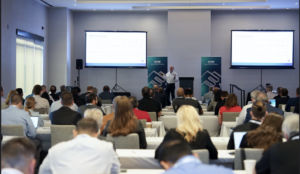
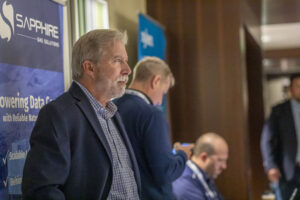

The 2nd High CAPEX Mega Facility Design & Build Summit was recently held in Phoenix, Arizona. There, it was the meeting point for those who would shape the future of American manufacturing. The Southwest is now the world’s preferred location for semiconductor fabs as well as EV gigafactories. Therefore, as a result, project managers are under tremendous pressure to complete these projects in record time.
This summit was all about how to run a high-CAPEX (investment) business. The sessions transitioned from the classic construction era into a tech-enabled, modular age. Moreover, with insights from Tesla, Panasonic, and leading engineering firms, the event laid out how to build massive plant shells.
Strategic Planning & Resource Efficiency
The opening of the summit focused on the heavy-hitting decisions made before a single shovel hits the ground. Whether it is managing money or vital resources like water, the consensus was clear. Alignment is everything. Furthermore, Tarun GOHEL, the Director, Project & Portfolio Controls at Catalent, Inc, tackled the nightmare of scope creep. He broke down how unclear requirements & stakeholder misalignment sink budgets. His solution involves moving away from static risk registers. Instead, he suggests using real-time decision tools & agile contract language. As a result, this encourages collaboration over conflict in a High-CAPEX environment.
Next, Melvin MATHEW, the VP, Utilities Engineering at T1 Energy, addressed the desert’s biggest challenge. He walked through water-saving strategies & tool-side optimizations that slash ownership costs. For markets like Central Texas / Arizona, he showed that the business case for MLD & ZLD systems is a financial must-have. Finally, Scott BENESH, the VP of Capital Projects, Co-Founder at VEERUM, showed how leading teams use 3D models in the cloud. As a result, this keeps everyone on the same page. Why wait for a mistake on-site? By identifying fabrication issues & safety risks in a virtual world, teams save time. Consequently, this helps them avoid the cascading costs of rework.
Augmenting the Workforce & Modernizing Assets
Labor shortages and aging facilities create constant hurdles. Because of this, these sessions focused on how to work smarter with the people and buildings we already have. Kelsyn ROOKS, the Director, Strategic Accounts – AI Solutions at Cupix, led a fireside chat on the human element. The big takeaway is that AI isn’t replacing the crew. Rather, it is augmenting them. By using tech to automate documentation, a leaner team can manage a massive High-CAPEX facility. In turn, this prevents burnout while ensuring no one misses a quality check.
Ryan GRUVER, the President of AFCOM, then shifted the focus to existing sites. He shared how to prioritize high-ROI upgrades & modernize infrastructure without any downtime. For operational sites, figuring out how to phase these budgets is the only way to stay competitive. Ray MOMSEN, the Vice President, Industrial Development at Bureau Veritas, delivered a blunt reminder. He stated that owner-led Quality Assurance is an investment, not an expense. Moreover, he explained that contractor QC alone isn’t enough. Instead, proactive, independent verification is what actually protects the Start of Production (SOP) date.
Powering the Future through Robotics & Resilience
The final stretch of the summit looked at the “nervous system” of the factory. It explored how we power these machines & how the machines are beginning to run themselves. Felix ELUGBAJU, the Electrical Engineering Manager at Panasonic Energy, discussed building for “Giga-scale” loads. He argued for moving past “code minimum” to production-critical designs. In a world of High-CAPEX builds, commissioning the electrical system is a strategic lever. Specifically, it keeps the lights on & the floor moving.
Terry L. RODGERS, the VP Design & Engineering at T5 Data Centers, focused on avoiding systemic failures. By using mission-critical design principles from day one, facilities can ensure reliability & energy efficiency. He shared common failure modes found in global assessments. As a result, this helps others avoid the same traps. To wrap things up, Alvaro BELTRAN, the Staff Manufacturing Controls Engineer at Tesla, gave a visionary look at the factory floor. He explored how robotics & AI are boosting precision while lowering costs. From smarter energy use to safer workplaces, he showed that automation is key. Ultimately, it makes these massive High-CAPEX plant shells more flexible & efficient.
The Powerhouse Panel Discussion
A major highlight was the panel discussion: “Future-Ready Infrastructure for Scalable Expansion and Equipment Flexibility.” Ryan Gruver (President, AFCOM) moderated the group. The panel included all the day’s key experts: Felix Elugbaju (Panasonic Energy), Alvaro Beltran (Tesla), Tarun Gohel (Catalent, Inc), Melvin Mathew (T1 Energy), and Terry L. Rodgers (T5 Data Centers).
The panelists debated the “modular vs. bespoke” build philosophy. Eventually, they reached a consensus. A High-CAPEX project must be modular enough to accept new equipment as technology evolves. Without a doubt, this is the only way it will survive the next decade. They also stressed that infrastructure must be “AI-ready” today. In doing so, owners support the automated processes of tomorrow.
Day Two: Specialized Engineering and Site Intelligence
The second day began with a focus on the semiconductor industry. Shantam Chavan, from ABB, delivered a session on the resiliency of electrical equipment. A single power dip can ruin millions of dollars in silicon wafers. Therefore, Chavan’s insights into electrical homologation proved vital for every High-CAPEX semiconductor stakeholder.
Kelsyn Rooks returned for a deeper dive into “Scaling Spatial Intelligence.” He demonstrated how AI turns 360-degree site videos into 4D intelligence. As a result, this effectively provides a “time machine” for the High-CAPEX owner. In short, they can verify exactly what exists behind a wall or ceiling before workers close the area.
Brian Hwang, the Director of Operations at Eastern Builders Inc, delivered the final presentation. He focused on the cultural side of construction. Furthermore, he argued that the relationship between the owner and the project network is a powerful predictor of success. Ultimately, it determines whether a High-CAPEX project stays on schedule.
The Experience: ASU Factory Site Visit
The summit concluded with a hands-on experience at the Arizona State University (ASU) Factory. Attendees toured the advanced manufacturing research facility. There, they saw firsthand how academic innovation and industrial application collide. Clear as it is, this visit highlighted why Phoenix has become the epicenter for High-CAPEX innovation. Evidently, a local ecosystem of talent and research supports the massive factories currently rising in the valley.
Innovation Partners: Powering the Future of Build
These leading organizations provide the critical technological frameworks and expert services necessary to de-risk, optimize, and accelerate the complex delivery of the world’s most ambitious industrial infrastructure projects.
Cupix – Presenting Partner
Cupix leads the world in AI-powered spatial intelligence. Their platform transforms simple 360-degree site captures into a high-fidelity 4D digital twin. This allows BIM teams to remotely monitor progress and identify clashes. For a High-CAPEX project, Cupix ensures that the “as-built” record remains perfectly accurate.
Furthermore, this provides a permanent digital asset. Such an asset is essential for long-term maintenance and future expansions. Their technology also reduces the need for expensive site travel. At the same time, it increases the transparency and accountability of the entire construction network.
ABB – Gold Sponsor
ABB is a pioneering technology leader. They provide the essential electrical infrastructure for advanced manufacturing. This includes everything from semiconductor fabs to EV battery plants. ABB’s solutions ensure the resiliency and reliability of high-load power systems.
In a High-CAPEX environment, even a microsecond of downtime leads to catastrophic financial losses. Because of this, ABB’s equipment provides the stability required for 24/7 production. Their expertise in electrical homologation also helps owners protect massive capital investments. In turn, this prepares facilities for a digital and sustainable future.
Bureau Veritas – Bronze Sponsor
Bureau Veritas leads the world in testing, inspection, and certification. They have over 40 years of experience in the industrial sector. Correspondingly, they help High-CAPEX facility owners mitigate risk and ensure total regulatory compliance. Their integrated services include building assessments, code compliance, and commissioning.
By providing independent oversight, Bureau Veritas ensures that mega-projects meet the highest safety and quality standards. Moreover, their presence on a project gives investors confidence. Quite simply, they know their complex industrial assets are structurally sound and operationally ready for use.
VEERUM – Bronze Sponsor
VEERUM offers a revolutionary “VisOps” platform. This tool helps industrial teams work visually. The platform consolidates diverse data sets like 2D drawings, 3D models, and drone scans. By integrating these into a single interface, VEERUM eliminates information silos.
These silos often plague large-scale construction. For High-CAPEX project managers, VEERUM provides a “single source of truth.” Moreover, this helps identify design errors before they become costly reworks. Ultimately, their technology empowers asset owners to optimize builds and shorten schedules with absolute precision.
To Sum Up
The 2nd High-CAPEX Mega Facility Design & Build Summit provided an essential masterclass in construction. From the strategic keynotes to the site tour, the event proved a vital point. Success in a High-CAPEX environment requires the total integration of digital tools and modular thinking. As stated, Phoenix continues to lead in manufacturing, and these insights will form the foundation for future mega-facilities. To stay at the forefront of these trends, we invite you to attend our future summits. In conclusion, join the conversation and help us build the future.