
For years, artificial intelligence teams improved the time to first token metric through straightforward means. They deployed faster graphics processing units. They expanded their server clusters. Engineers also refined complex model architectures. These legacy strategies delivered strong performance gains for early applications. However, they no longer solve every modern performance bottleneck. High-density artificial intelligence deployments now place unprecedented pressure on physical facility infrastructure.
Therefore, thermal design influences inference performance before software optimization even begins. Dallas, Texas, perfectly highlights this dramatic operational shift. The region continues to attract massive investments and large-scale hyperscale data center developments. Consequently, forward-thinking organizations now view the time to first token metric as a physical infrastructure outcome. They no longer treat it as a pure compute metric.
Why AI Infrastructure Now Determines Time to First Token
AI performance no longer depends on compute alone. Instead, infrastructure decisions now shape latency, scalability, deployment speed, & long-term operational efficiency.
Why GPU Scaling No Longer Reduces Time to First Token
For more than a decade, organizations have scaled AI performance by adding more compute. Bigger clusters provide faster results. New accelerator generations also increased throughput. Today, that approach yields smaller returns. Current AI environments run on an entirely different scale. Blackwell-class deployments drive power and thermal demands to levels new to enterprise workloads. Therefore, data center limitations can often be a bottleneck to performance before GPUs can utilize their full computing capacity. Adding more hardware is no longer a surefire way to get down to time to first token time.
And infrastructure teams are now focusing on sustained performance, not peak specifications. Vendors routinely release benchmark figures based on optimal configurations. Production systems rarely run in those modes. GPU performance is a function of power, thermal stability, and workload consistency. As a result, engineering teams are increasingly focused on usable compute rather than installed compute. This change has been particularly significant in Dallas, Texas. New AI campuses need to cater to long-duration inference workloads while providing consistent response latencies.
How Thermal Headroom Determines Usable AI Compute
Many are focused on the GPU specs when planning infrastructure. But real-world performance is usually limited by thermal headroom. Inference computation heat Modern accelerators can produce a great deal of heat when inferring. As temperatures augment past optimal levels, operating frequencies of the systems are scaled down. Adjust those, and that will protect the hardware. But they also reduce sustained output and add noise under continuous loads, he wrote.
As a result, best practice operators don’t consider cooling a support function anymore. They view thermal capacity as a performance resource. Warm stable states enable GPUs to stay in boost states for longer. The result is that organizations are able to provide more predictable AI services while attaining higher GPU utilization. This relationship directly translates into time to first token. It also affects the economics of infrastructure, as higher utilization means getting more value out of the costly accelerator investments.
Why Rack Density Is Reshaping AI Facility Design
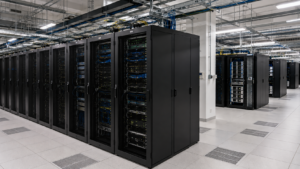
AI infrastructure has redefined facility planning. Traditional enterprise environments don’t come close to pushing rack densities to the extreme. Modern AI implementations run in a different environment. Many new installations can now handle power levels that would have been considered fantasy just a few years ago. As a result, mechanical, electrical, and cooling systems disciplines need to be more integrated from the very beginning of the design.
On the other hand, server deployments are now increasingly planned around heat removal capacity by project teams before finalizing them. This is in line with the reality of the broader industry. Hardware shortages aside, infrastructure constraints can slow AI rollouts. So flexibility is what the operators want when developing a facility. Dallas continues to draw investment because developers can plan new campuses to these requirements. In comparison, many — if not most— legacy sites will require expensive upgrades in order to support higher-density AI data centers in the future, as well as longer-term growth objectives.
Why Time to First Token Has Become a Business KPI
Technology executives once measured the success of their infrastructure by uptime and capacity installed. Those numbers still matter. But now, the focus is on the business outcomes. Quicker AI responses lead to better customer experiences and greater application adoption. As a result, executive teams are increasingly tracking time to first token along with more traditional operational metrics.
It also changes where you invest. Businesses don’t consider facilities based on theoretical performance anymore. Instead, they look at how well the infrastructure aligns with production workloads. Quicker responses provide financial impact to your bottom line. And they help to compete in busy AI markets. So now the infrastructure strategy is a little more than just engineering talk. It affects the budgets they set, the expansion they plan, and the revenue they expect. And as the potential for AI adoption continues to accelerate in North America, those that optimize for time to first token will be best positioned to improve operational performance and market penetration over the long term.
Thermal Architecture Is Becoming the Next AI Competitive Advantage
Thermal architecture now shapes AI deployment decisions. Consequently, engineering teams increasingly optimize infrastructure for sustained performance instead of theoretical hardware capacity.
Why Performance per Watt Matters More Than Traditional Efficiency Metrics
For a long time, operators have relied on Power Usage Effectiveness (PUE) to gauge the efficiency of a data center. It’s still a useful number. But AI workloads need a different lens. Infrastructure executives are now wondering: How many megawatts of useful AI work can we get? This is an investment shift. Thus, thermal management now enables business performance rather than competing against it to minimize energy use.
In addition, the infrastructure is increasingly compared via performance per watt rather than facility efficiency alone. Improved thermal management enables accelerators to run at higher frequencies for longer durations. As a result, providers can generate more AI work without amplifying power consumption. This approach fortifies long-term profitability, while enabling growth in AI services across hyperscale ecosystems.
Why Coolant Distribution Has Become an Engineering Strategy
Today’s liquid cooling designs go far beyond picking cold plates or tubing configurations. Engineering teams are designing coolant distribution for scalability, maintenance, and upgradability. Therefore, the configuration of the CDU affects the speed of deployment well before a system goes into production. Inadequate planning can result in a slowing of the commissioning process, increase the risk associated with operation, and limit growth of plant output.
In the meantime, modular distribution systems make it easier to widen infrastructure without halting the current workload. This method also simplifies the maintenance process since operators can isolate particular cooling loops for servicing. As a result, liquid cooling is becoming more and more embedded into long-term infrastructure roadmaps rather than being conceived and delivered as a standalone mechanical system. That model enables new AI campuses to adapt more quickly to shifting compute demands.
Why Brownfield AI Projects Demand Different Engineering Decisions
A lot of businesses don’t have the ability to build new AI campuses from scratch. They renovate or retrofit aging buildings. Brownfield projects present challenges of their own, as legacy infrastructure is almost never compatible with today’s power densities in AI. Existing chill water, structural loading, and electrical distribution are typically phased to be upgraded. As a result, there are as many retrofit design strategies as there are choices for technology.
In addition, successful retrofits need to maintain operations during construction. Groups aren’t able to take long periods of downtime to increase AI capacity. For this reason, engineering teams pace upgrades and test every infrastructure dependency in advance of deployment. This disciplined methodology also allows existing high-density AI data centers to continue competing without having to tear down entire facilities.
Why Thermal Intelligence Is Replacing Static Operations
Conventional cooling systems respond after temperature rises. New AI environments require new thinking. Operators are also increasingly integrating real-time telemetry with predictive analytics to predict changes in workload prior to thermal conditions degrading. As a result, the infrastructure is responding proactively rather than reacting to issues post event of them.
Intelligent control platforms also enable the operator to trade performance, resilience, and OpEx in a highly complex AI environment. These platforms suggest cooling modifications according to workload dynamics, not static operating rules. As a result, organizations enhance GPU utilization while cutting excessive energy usage. In addition to that, this operating model enables the infrastructure to be more resilient as AI workloads keep expanding in size and complexity.
Building Infrastructure for the Next Generation of AI
Future AI growth will depend on adaptable infrastructure. Therefore, organizations must combine engineering flexibility, operational resilience, & regional planning to support larger AI deployments.
Why Water Strategy Is Becoming an Infrastructure Decision
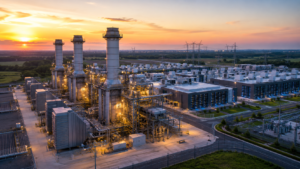
Water availability is now a factor in where companies choose to locate new AI centers. Several areas are under rising water demand. As a result, operators assess cooling options in conjunction with local sustainability objectives. Warm-water-based solutions, water recirculation, and more efficient heat dissipation continue to be in the spotlight as they are enablers of long-term infrastructure resilience.
Dallas provides a useful example of this shift. The region is still drawing big AI investment, and now also infrastructure innovation. As a result, builders are beginning to consider water efficiency from the very first stages of planning. This is a winning formula for AI growth and its related ecosystem and helps ensure that expanding AI environments are environmentally responsible.
Why Dallas Is Emerging as an AI Infrastructure Hub
Dallas is no longer just a good data center expansion destination. That region has started to attract hyperscalers, colocation providers, engineering firms, and technology vendors involved in the next-gen AI infrastructure. Robust connectivity, a pro-business climate, and ongoing investment foster an environment ripe for rapid growth.
Moreover, the regional system is showing a propensity for developing cross-supply-chain collaboration in AI infrastructure. Equipment manufacturers, engineering consultants, and facility operators are increasingly piloting new models of deployment in Texas. As a result, Dallas continues to set the bar for what North America’s future AI infrastructure looks like. The region now serves as both a construction market and an innovation hub.
Why Infrastructure Flexibility Will Define Future AI Success
The development of AI hardware is moving faster than ever before. Centers built for today’s needs might not be able to accommodate the platforms of tomorrow. As a result, engineering teams are increasingly favoring flexible mechanical and electrical systems rather than fixed infrastructure layouts.
In addition, flexible infrastructure reduces the costs of upgrades in the future and the time to deployment. Modular power infrastructure, scalable cooling systems, and standard mechanical designs enable expansion while preserving existing operations. Hence, institutions construct their buildings to serve subsequent generations of accelerators with growing production environments as they evolve their AI inference production environments, while delivering consistent AI inference latency.
Why Collaboration Will Shape the Next Phase of AI Infrastructure
Solving future AI infrastructure problems is beyond any single organization’s capabilities. Semiconductor manufacturers, cooling suppliers, utilities, engineering firms, and operators all play a role in successful deployment. And collaboration has become a key competitive advantage in the industry.
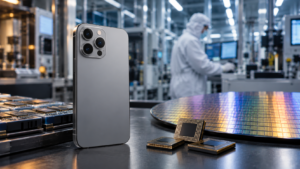
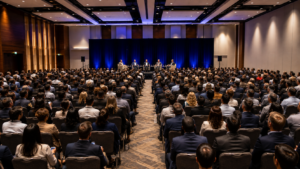
Industry conferences have provided a crucial venue to share practical experiences; to assess new and emerging technologies; and to build strategic partnerships. Hence, it is important that leaders with the vision to enhance thermal management, increase AI infrastructure, and lead in advanced liquid cooling solutions are engaged in the discussions that determine the future best practices.
To Sum Up
Discussions of time to first token now go far beyond model optimization. It serves as the foundation of how data center engineering, infrastructure design, and operational practices converge to produce AI performance. Organizations that prioritize these are ones more likely to become long-term winners and can best leverage every AI investment. To discuss such challenges and new solutions, we invite you to the 9th High-Density AI Data Center Cooling & Thermal Management Summit, August 18-19, 2026, in Dallas, TX. The two-day event will cover breakthrough techniques in advanced cooling, resilient AI infrastructure, and actionable strategies for next-generation high-density data centers, with discussions on next-generation, highly scalable systems.