

Elon Musk wants to build a factory that makes the chips his companies need. The idea sounds simple enough: if Tesla, SpaceX & xAI need more computing power, why not make more of their own chips instead of relying on outside suppliers?
The hard part is making those chips.
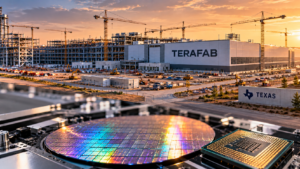
Musk’s planned Terafab project in Texas could involve up to $119 billion across four phases. The first phase is expected to cost more than $16.8 billion. The plan is to bring logic chips, memory & advanced packaging together at one site.
Tesla needs chips for its vehicles & Optimus robots. SpaceX needs computing hardware for its operations, while xAI needs processors to run its AI systems. Having more control over chip production could help all three companies secure the hardware they need.
But a factory is not useful just because it has been built. It must produce chips that work, meet quality standards & cost enough to make financial sense. That can take years of testing, adjustments & investment.
So, can Musk get the factory running before the cost becomes a problem? Three issues will help answer that question.
Terafab: Where Will the $119 Billion Go?
The $119 billion figure is the possible total investment across four phases. It is not the amount already spent. The first phase alone is expected to cost more than $16.8 billion.
Texas has also announced a $30 million grant for the project through its Texas Enterprise Fund. The planned facility in Grimes County is expected to create around 3,000 jobs.
Those figures tell us how large the project could become. They do not tell us how much it will cost to produce each chip.
Building the factory is only the first expense
A semiconductor fab needs much more than a large building. It requires specialised machines, cleanrooms, reliable power, water treatment systems & workers who know how to run the equipment.
Once the building is ready, engineers must install the machines & test them. They then need to get the manufacturing process working properly. Early production runs may reveal defects, forcing the team to adjust the process & test it again.
This work can take time. The company must keep paying for the facility & its staff even when production is limited.
That is one reason the gap between construction & manufacturing matters. A completed building does not mean the factory can supply chips to Tesla, SpaceX, or xAI.
Reports have pointed to late 2029 as a possible start for production at the main Texas facility, with output expected to increase later. These are reported timelines, not a guarantee. Equipment installation, testing & production problems could affect the schedule.
How many chips will actually work?
Chipmakers pay close attention to something called manufacturing yield. It measures how many chip dies meet the required standards.
For example, imagine a factory produces 100 chip dies. If 60 work as intended, the yield is 60%. If engineers improve the process and 90 work, the factory gets more usable chips from the same number of dies.
These numbers are only an example, not a prediction for the project.
A low yield means the factory gets fewer usable chips from its production runs. It can also mean more time spent finding defects & fixing problems. That pushes up the cost of each working chip.
The problem does not end there. Tesla needs processors that meet its requirements, not just chips that pass a basic test. The same applies to the hardware used by SpaceX & xAI.
If the factory cannot produce enough chips that meet those requirements, the companies may still have to buy from outside suppliers.
That is why production volume alone will not tell us whether the project is working. We will also need to know how many chips pass testing, how much they cost to make & whether the factory can deliver them regularly.
Will making chips in-house save money?
This is where the financial case gets interesting.
Established chipmakers already have equipment, experienced teams & manufacturing processes that have been refined over many years. They also serve many customers, which helps them spread the cost of running their factories.
A new factory has to build that experience while covering its own costs.
Terafab could still be worth the investment if it gives Musk’s companies something they struggle to get from outside suppliers. They might gain more control over chip supply, develop processors for their own products & plan production around their needs.
But making every chip in-house would not automatically be the cheapest option.
If an outside supplier can produce a particular chip at a lower cost, buying it may make more sense. If that supplier cannot provide enough chips or meet the required deadlines, producing them internally could be worth the extra expense.
The answer may differ from one product to another. The companies will need to compare the cost of making each type of chip with the cost & availability of buying it.
Can Intel 14A, Equipment & Infrastructure Get the Factory Running?
The project has been linked in reports to Intel’s 14A manufacturing process. TSMC has also confirmed discussions about possible cooperation. Both developments matter, but neither proves that the factory is ready to produce chips at scale.
A chip process takes time to get right
Advanced chip manufacturing involves hundreds of steps. Machines create patterns on silicon wafers, add materials, remove selected layers & inspect the results. Each step must work with the others.
A problem at one stage can affect the finished chip. Engineers need to find the cause, change the process & test it again. They may have to repeat this work several times before production becomes reliable.
There is also a difference between making a test chip and producing chips in large quantities. A small batch may work well, but larger production runs can reveal defects that were not obvious at first.
Intel’s experience could help with the manufacturing work. However, the exact process choices & responsibilities still matter. A reported connection to Intel 14A does not tell us who will handle every stage or how quickly the factory will reach its targets.
The goal is not simply to make a chip that works once. It is to make large numbers of chips that meet the same standards.
Power, water & skilled workers matter too
A chip factory depends on reliable infrastructure. Its equipment needs stable electricity, while cooling systems add to the facility’s power demand.
Water is another major requirement. Semiconductor production uses ultra-pure water for certain steps, so the site needs treatment systems and a reliable supply. It also needs to manage wastewater properly.
Cleanrooms must keep dust and other particles under tight control. Temperature, humidity & airflow also need careful management. If these conditions are not right, contamination can damage chips or reduce production yield.
Then there are the workers. The factory needs engineers who understand the manufacturing process, technicians who can maintain the equipment & operators who can run it safely and consistently.
Hiring people is only part of the job. A new team also needs time to learn how the equipment behaves and how the full process works.
These requirements affect the construction schedule. If the power system is not ready, machines may have to wait. Furthermore, if the cleanrooms are not properly prepared, installation can be delayed. If the team cannot solve production problems quickly, the factory may take longer to reach its targets.
What role could TSMC play?
TSMC confirmed in October 2026 that it was discussing possible cooperation around the project. No final agreement had been announced.
There is an important point to resolve. Musk has said his companies intend to build & run the factory, while leaving open the possibility of leasing part of the site to TSMC. TSMC, meanwhile, has said that facilities producing its chips would need to be operated by TSMC.
So, if the companies work together, they will need to agree on who runs which part of the operation.
TSMC has extensive experience in advanced chip production. Its involvement could bring useful manufacturing knowledge, but the value would depend on the final agreement. The same applies to Intel’s role.
Until the details are confirmed, it is better to treat TSMC’s involvement as a possibility rather than a completed partnership.
Can Terafab Give Musk’s Companies an Advantage?
Tesla, SpaceX & xAI could provide a steady base of demand for the factory. That gives the project a potential advantage over a new chipmaker that must first find customers.
But these companies do not all need the same hardware.
Tesla needs chips for vehicles & robotics. SpaceX has different computing requirements, while xAI needs processors for AI workloads. Their needs may also change as products develop.
The factory must make the chips its customers need
A processor designed for a vehicle may not suit a robot or an AI data centre. Different products have different needs for computing power, energy use & reliability.
When a company changes its chip design, the factory may need to adjust its manufacturing process. The new chip may also need testing before it can be used in the finished product.
This makes planning important. If a product launch is delayed, the factory may have less work than expected. If demand grows faster than planned, the factory may not have enough capacity.
Musk’s companies will need to decide which chips they want to make themselves and which they should continue buying from other manufacturers.
That choice will affect how well the factory uses its capacity. A large facility is expensive to run, so keeping it busy with the right products matters.
A US factory will still depend on global suppliers
The project could add to US semiconductor manufacturing capacity. It could also create work for engineers, construction firms, equipment suppliers & technical specialists.
However, building a factory in Texas will not make the companies independent of the rest of the semiconductor industry.
Advanced chipmaking equipment comes from specialised suppliers. The factory will also need materials, spare parts & other services. Delays in any of these areas could affect production.
Advanced packaging matters as well. Some chips need several components to be connected and packaged together before they can be used. That work requires its own equipment, skills & production capacity.
Terafab may bring more stages of manufacturing under one roof, but it will still rely on suppliers outside the site.
Should other companies build their own fabs?
Not necessarily.
A company that needs relatively few chips may be better off buying them from an established supplier. Another company may want to design its own chips but leave manufacturing to a foundry. Building a factory makes more sense when demand is high enough, supply is difficult to secure & the company can afford the cost.
Each option comes with trade-offs. Buying chips reduces the need to invest in a factory, but it leaves the company dependent on suppliers. Making chips in-house offers more control, but it also means taking responsibility for equipment, staff, production problems & costs.
Musk’s project will be a useful test of whether the benefits of owning more of the process outweigh those costs.
For the wider AI chip supply chain, the important question is whether the factory can deliver working chips in the quantities its customers need. Its investment figure alone cannot answer that.
To Sum Up
Musk wants more control over the chips his companies use. Building a factory could help, but the project still has to overcome the hard parts of semiconductor manufacturing.
The factory needs the right equipment, reliable power & water, experienced workers, and a process that produces chips consistently. The cost of reaching that point will also matter. If production takes too long or yields remain low, the companies may need outside suppliers for longer than planned.
These are the same issues facing companies building advanced semiconductor facilities across the United States.
The 8th U.S. Semiconductor Design, Construction & Engineering Summit takes place on 4–5 November 2026 at AC Hotel Phoenix Downtown in Phoenix, Arizona. It brings together professionals working in semiconductor design, fab construction, engineering & facility operations.
Topics include cleanrooms, critical utilities, advanced packaging, equipment installation & production ramp-up. These are practical areas that can affect whether a new facility reaches production on schedule.
Frequently Asked Questions
What is Terafab?
Terafab is a planned semiconductor manufacturing project linked to Elon Musk’s companies. It aims to bring logic chip production, memory & advanced packaging together to supply computing hardware for AI, robotics & space-related uses.
How much will Terafab cost?
The project could involve up to $119 billion across four phases. The first phase is expected to cost more than $16.8 billion. These are planned investment figures, not confirmation that the full amount has been spent.
Where is Terafab being built?
The planned large-scale facility is in Grimes County, Texas. The project aims to bring several stages of chip manufacturing together at one site.
Is TSMC partnering with Terafab?
TSMC confirmed discussions about possible cooperation in October 2026, but no final agreement had been announced. Its role will depend on the outcome of those talks.
What is Intel’s role in Terafab?
Intel announced its involvement in 2026, and reports have linked the project to Intel’s 14A process. The exact manufacturing responsibilities still need to be clear.
When will Terafab start producing chips?
Reports have pointed to late 2029 as a possible start for production at the main Texas facility, with output expected to increase later. These are projections, and the timing will depend on construction, equipment installation & manufacturing progress.
Why is advanced chip manufacturing difficult?
Chip factories need specialised equipment, cleanrooms, reliable power, ultra-pure water & skilled workers. Engineers must get hundreds of manufacturing steps working together before the factory can produce enough reliable chips at a competitive cost.