



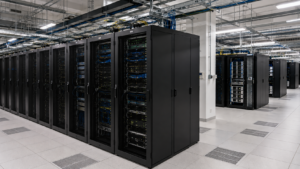
Power-hungry data centers have become the choke point for AI infrastructure in the US. Getting land is no longer sufficient. Developers must also find a source of dependable electricity in markets where demand outstrips supply. Consequently, utilities are now deciding the fate of every major project. They do not operate on a first-come, first-served basis, however, when it comes to approving interconnections. They are instead subject to a tiered review that weighs grid reliability, long-term planning, and customer need. Knowing that process enables them to build better projects and avoid delays.
How a Large Data Center Power Request Moves Through Utility Review
Every large-load application follows a structured review before electricity is committed. Each stage answers a different technical question & determines whether the project can move closer to energization.
Initial Load Requests Begin with a Commercial and Technical Review
Every data center power delivery begins before engineers analyze the electrical system. Utilities evaluate whether the proposed project is realistic and mature enough to be advanced. They assess the requested load, project timeline, land ownership, financing, and potential construction milestones. This process eliminates the speculative applications that could tie up capacity and never lead to development. The PJM Interconnection, which runs the nation’s largest wholesale electricity market, has made its scrutiny more stringent as AI-driven large load requests have been growing across a number of eastern U.S. states.
Grid Impact Studies Measure How the Network Will Respond
Clearing the initial review does not ensure a connection. Engineers need to know the impact of a proposed facility on the existing power system before they can assess its feasibility. They conduct detailed grid impact studies to analyze the transmission loading, voltage stability, fault levels, and future load forecast. These studies also identify upgrades necessary to serve existing customers. In Texas, the Electric Reliability Council of Texas (ERCOT) is seeing more high-demand projects for evaluation because of fast growth in AI infrastructure, putting unparalleled strain on regional transmission corridors and generation resources.
Infrastructure Planning Identifies What Must Be Built
Many projects require much more than just a service connection. They typically require additional transformers, switchgear, upgrades to the transmission system, or new substations before data center power can be delivered. Utilities estimate these needs in advance because certain electrical components require many months to fabricate and install. In central Ohio, American Electric Power (AEP Ohio) is still pouring money into transmission upgrades and new substation capacity as hyperscale development continues to draw around Columbus. Advanced infrastructure planning enables utilities to minimize service disruptions and maintain dependable service to existing neighborhoods.
Service Agreements Turn Engineering Plans into Construction Timelines
Upon completion of the technical reviews, the utility prepares a service agreement specifying the terms and conditions under which the project will be supplied electricity. The agreement specifies the construction responsibilities, estimated connection dates, the costs of infrastructure, and options for future expansion. Many developers also will take phased energization rather than wait for the entire campus to complete. This procedure enables one part of the plant to go online while electrical work continues in other areas. Compass Datacenters has applied phased development in multiple U.S. markets with the purpose of matching buildout schedules to existing or planned utility infrastructure and mitigating project delays.
Data Center Power: The Factors That Separate Approved Projects from Delayed Ones
Completing technical studies is only one part of the approval process. Utilities also compare projects against several commercial, operational, & infrastructure factors before allocating limited electrical capacity.
Grid Readiness Often Determines the Fastest Connection
Project placement can affect the timeline of its interconnection more than project size. Utilities begin by determining if local transmission lines, substations, and distribution assets have sufficient grid capacity to accommodate the requested load. Proximity to existing infrastructure generally means less upgrading and less investment. In contrast, a project in a tight market may wait for new transmission for years. Arizona is a good example of this. Arizona Public Service (APS) has also bolstered the Phoenix area’s electric grid as the state draws more AI data centers and cloud infrastructure investments.
Project Readiness Reduces Risk for Utilities
Utilities seek developments that will go from planning to construction without having to wait too long. So they consider more than just the electrical demand. They examine land ownership, environmental permits, financing, engineering progress, and construction schedules before capacity reservation. A project with due diligence already completed is less risky than one based on projections. Meta’s Richland Parish Data Center in Louisiana is an expression of this ethos. The company acquired land, announced significant investment plans, and led a development effort before scaling infrastructure deployment and utility planning.
Load Profiles Shape Long-Term Utility Planning
Not all customers use electricity in the same way. For this reason, utilities study the power consumption of a plant once it is up and running. They analyze steady-state load, future phases of expansion, anticipated peak loads, and potential demand response. This information enhances the long-term load forecast and assists in capital planning by engineers. Google’s campus in Council Bluffs, Iowa, illustrates why these studies matter. The firm has grown the site in a series of phases, with infrastructure enhancements added to meet rising data center power requirements rather than an initial delivery of full capacity.
Regional Investment Strategies Influence Future Capacity
The infrastructure of many states is still growing as digital investment has become an economic imperative. And the enhancements don’t mean automatic approvals. But they are creating more robust conditions for growth down the road. Georgia Power has made transmission and distribution enhancements as the Atlanta area draws more hyperscale development. The Tennessee Valley Authority (TVA) is also modernizing generation and transmission assets to support advanced manufacturing and digital infrastructure. These are long-term investments that enhance utility interconnection options and increase reliability for potential future hyperscale data centers nationwide.
How Developers Can Secure Data Center Power Faster
Utilities cannot accelerate every project. However, developers can improve their chances by making smarter decisions long before construction begins. Early planning, realistic expectations, & close collaboration often shorten connection timelines & reduce unexpected costs.
Engage Utilities Before Selecting a Site
A lot of developers talk about prices on land, tax incentives, and availability of fiber long before they talk about data center power with a potential utility. The sequencing can result in unnecessary hold-ups, as power issues may not surface until a site is chosen. Developers should also be working with utilities in the site selection process, not the other way around. Preliminary discussions to determine these factors can take place very early on in the process. Duke Energy promotes early involvement for large load customers so engineers can address potential technical issues before developers invest large sums of money in locations that could be non-starters.
Build Around Existing Infrastructure Instead of Waiting for New Capacity
The fastest path to connection is generally to select a site with a history of strong electrical service. Developers can save costs by situating their projects near existing substations, transmission lines, or industrial parks with excess capacity. It also constrains the need for large grid upgrades. QTS Data Centers has taken this approach in several U.S. markets, going deeper within existing campuses rather than developing greenfield solutions. Repurposing existing infrastructure accelerates the pace of construction, and enables utilities to provide data center power more efficiently and dependably.
Strengthen Energy Resilience Beyond the Utility Connection
Dependable grid power is the cornerstone of every hyperscale campus. Yet many providers now augment resilience through other energy solutions. Behind-the-meter natural gas generation, battery energy storage systems, and renewable power purchase agreements can help maintain business operations in high-load periods. These solutions are meant to complement – not replace – a utility interconnection. xAI’s Memphis campus is also a reflection of this rising trend. The company is looking at additional on-site generation as local infrastructure grows to serve increasing AI computing demand.
Treat Utilities as Long-Term Infrastructure Partners
Successful projects recognize that utility relationships extend far beyond the first connection. Developers should communicate future expansion plans, anticipated load growth, and operational changes during the project’s life cycle. This leads to better load forecasts for the utilities and also enables them to better prioritize infrastructure investments and plan for future transmission upgrades. In exchange, developers have better insights on future capacity enhancements and potential expansion opportunities. Long term cooperation reduces also uncertainty, since both sides base their decisions on the same sets of assumptions rather than reacting to surprise expansions.
To Sum Up
Data center power has become one of the scarcest resources in the U.S. digital infrastructure market. Instead of considering simple application deadlines, utilities now assess projects based on engineering studies, infrastructure availability, project readiness, and long-term planning. Developers who know these priorities can make smarter site decisions, avoid delays, and have better project results. Explore these challenges further by joining the 8th Time-to-Power & Capacity for Data Centers Summit from 18–19 August 2026 in Dallas, Texas. The summit is designed to connect utilities, hyperscalers, developers, engineers, and thought leaders in energy. This is around practical means to speed up data center buildout across the U.S.