

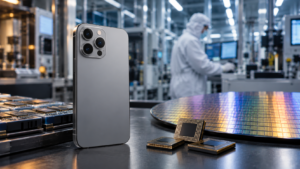

The semiconductor industry has been transformed by artificial intelligence more rapidly than most governments had anticipated. Until recently, the semiconductor industry had semiconductors mainly powering smartphones, laptops, and gaming devices. Now, AI systems, cloud platforms, military technology, autonomous systems, and huge data centers run on advanced chips. Consequently, semiconductor self-sufficiency became the top urgent strategic focus for the U.S.
Semiconductor independence allows the United States to be less reliant on foreign chipmakers. It also supports U.S. access to vital AI infrastructure, resilient supply chains, and safeguards for long-term economic growth. Because of this, chip production now has an impact far beyond the tech industry.
The U.S. still dominates in AI software, high-performance computing, and chip design. But the majority of leading-edge semiconductor fabrication is done abroad, not in the United States. The disparity was causing mounting unease in Washington, Silicon Valley, and the semiconductor industry at large. At the same time, supply-chain interruptions laid bare how American companies had grown reliant on foreign manufacturing systems.
Today, leading-edge semiconductors are the foundation of AI leadership, defense readiness, industrial growth, cloud computing, and national security. The countries that dominate advanced semiconductor production will probably determine the next generation of AI innovation and global technology infrastructure. So semiconductor independence is now at the heart of America’s long-term economic strategy.
Why AI Growth Changed America’s Semiconductor Priorities
Generative AI sharply increased demand for advanced semiconductors across the United States. Large AI models require huge amounts of computing power during training and deployment. Therefore, companies now need highly specialized chips that can process massive workloads quickly and efficiently.
Traditional CPUs cannot handle modern AI workloads at a large scale. Because of this limitation, companies increasingly rely on GPUs and AI accelerators built with advanced semiconductor processes. NVIDIA became one of the most important companies in the global AI race. Its chips now power many leading AI systems worldwide.
Advanced AI systems cannot grow without stable semiconductor supply chains. AI infrastructure depends heavily on GPUs, high-bandwidth memory, advanced packaging systems, and high-speed networking technologies. Consequently, semiconductor independence now directly supports America’s AI expansion strategy.
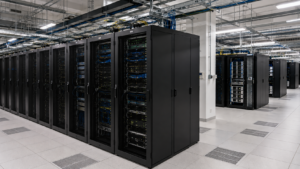
At the same time, American cloud providers expanded AI infrastructure aggressively. Microsoft, Amazon, Google, and Meta continue investing billions into AI-ready data centers across the United States. These facilities support enterprise AI platforms, machine learning systems, and generative AI tools. However, every advanced data center requires thousands of semiconductors running continuously at high performance.
The AI boom also changed energy and infrastructure priorities. Advanced AI processors consume huge amounts of electricity and generate significant heat. Some modern AI facilities consume energy comparable to small cities. As a result, semiconductor facilities now prioritize advanced cooling systems, operational efficiency, thermal management, and scalable infrastructure planning.
Think of semiconductor fabs as the factories powering the entire AI economy. Without advanced semiconductor manufacturing, AI companies cannot expand infrastructure fast enough to meet growing demand. Therefore, semiconductor independence now influences both technological innovation and economic growth across the United States.
Why Taiwan Became Essential to America’s AI Chip Supply Chain
Taiwan dominates advanced semiconductor manufacturing because it has built one of the world’s most advanced fabrication ecosystems. TSMC manufactures leading-edge chips for companies including Apple, AMD, and NVIDIA. Meanwhile, very few facilities outside Taiwan can produce comparable semiconductors at scale.
This manufacturing concentration created major strategic concerns for the United States. American companies still lead in semiconductor design and AI software innovation. However, they rely heavily on overseas fabrication capacity for advanced chip production. Consequently, semiconductor independence became increasingly important for long-term economic resilience and national security.
Taiwan built its semiconductor leadership over several decades. The country invested heavily in engineering talent, fabrication infrastructure, manufacturing expertise, and supplier ecosystems. Furthermore, advanced semiconductor production requires extreme precision during every stage of manufacturing. Even microscopic contamination can affect chip yields and delay production timelines.
The AI chip supply chain also depends heavily on Taiwan because advanced GPUs require highly sophisticated manufacturing processes. AI chips now use advanced packaging systems that improve communication between processors and memory systems. Therefore, semiconductor leadership now depends on fabrication, packaging, cooling technologies, testing systems, and operational coordination at the same time.
The concentration of advanced manufacturing inside Taiwan also creates geopolitical risks. Any disruption affecting semiconductor production could impact AI infrastructure, cloud computing, automotive manufacturing, defense systems, and telecommunications networks across the United States. Consequently, American policymakers increasingly focus on strengthening domestic semiconductor manufacturing capacity.
Why does the United States rely so heavily on Taiwan? Simply put, Taiwan currently produces most of the world’s most advanced semiconductors faster, more efficiently, and on a larger scale than competing manufacturing regions. That manufacturing advantage became critically important during the AI boom.
How Supply Chain Disruptions Changed America’s Manufacturing Strategy
The pandemic revealed major vulnerabilities within global semiconductor supply chains. Shut factories, worker shortages, shipping delays, and demand surges wreaked havoc on manufacturing across a host of industries. Consequently, U.S. companies found it difficult to obtain sufficient semiconductors for both industrial and consumer uses.
The automotive sector was hit by some of the most severe disruptions. Safety systems, sensors, displays, connectivity features, and even on-board computing in modern vehicles now depend heavily on semiconductors. However, shortages of chips led to production halts and delays in deliveries. Electronics firms, meanwhile, were faced with inventories running low and the price of components increasing.
The disruptions were also felt directly by consumers. Game consoles, networking equipment, laptops, and graphics cards were hard to come by. Prices rose sharply as the demand for semiconductors outstripped supply. As a result, semiconductor autonomy became a significant economic and industrial concern for the United States.
The supply chain crisis has also altered the way companies assess manufacturing resilience. Until now, many companies have been largely focused on efficiency and reducing manufacturing costs. Now, companies are prioritizing supplier diversification, inventory resilience, access to regional manufacturing, and security of operation.
Today, the impact of the global semiconductor shortage is far more wide-ranging than just consumer electronics. Advanced AI systems also need a stable supply of GPUs, memory technologies, packaging capabilities, and manufacturing infrastructure. Consequently, interruptions in the semiconductor supply chain can slow down innovation in healthcare, finance, cybersecurity, logistics, manufacturing, and defense all at once.
Manufacturers began upgrading the operational systems themselves to be more resilient and scalable. Today, quite a few plants are doing business in AI-driven logistics, predictive maintenance models, modular construction, digital manufacturing coordination, and sophisticated HVAC systems. These technologies make an organization more efficient. They also eliminate production bottlenecks.
Why America Is Investing Billions Into Domestic Semiconductor Manufacturing
The U.S. ramped up semiconductor funding via massive industrial policy measures. The CHIPS and Science Act expedited financing for chip factories, semiconductor research, workforce development, and advanced manufacturing infrastructure. Consequently, independence in semiconductors jumped from a policy debate to a major industrial strategy.
Several firms have announced significant production expansion plans in Arizona, Texas, and Ohio. Intel raised fab investments, and TSMC expanded its manufacturing presence in the U.S. At the same time, memory producers and suppliers to the semiconductor industry spurred domestic infrastructure buildout.
So why are semiconductor fabs so costly? Modern semiconductor fabrication also demands very specialized cleanrooms, contamination control mechanisms, cooling infrastructure, water recycling systems, and high-precision manufacturing tools. Certain high-end fabs run into the tens of billions of dollars, and that’s before the production even starts.
These investments simultaneously advance a number of strategic objectives. Domestic fabs, first, bolster supply chain resilience. Second, they bolster long-term infrastructure growth for AI. Third, they generate high-value engineering and manufacturing jobs in every state. And they decrease reliance on foreign production centers, while building up American capacity to manufacture semiconductors.
Moreover, industry leaders are focused on scalable construction methodologies and operational efficiency. Businesses are now giving more attention to advanced packing systems, the integration of digital twins, workforce preparation, energy savings, and sustainable manufacturing practices. These agendas represent the fact that semiconductor production is now directly tied to the growth of the AI infrastructure and long-term industrial resiliency.
Additionally, building a semiconductor fab requires a huge amount of coordination among engineering, construction, operations, and energy management personnel. As a result, companies are continuing to invest in modular systems, automation technologies, advanced cleanroom environments, and smart manufacturing infrastructure. These investments enhance scalability and operational reliability.
To Sum Up
The United States’ drive for semiconductor independence now touches development more broadly, rather than just chip manufacturing. Today, advanced semiconductors are at the core of AI leadership, cloud infrastructure growth, national security, economic resilience, and long-term industrial competitiveness. With the pace of AI adoption swiftly advancing across the United States, so will the need for cutting-edge semiconductor technology.
Meanwhile, firms and governments are under increasing pressure to enhance domestic production capabilities, bring the AI chip supply chain onshore, and/or mitigate long-term supply chain risks. As a result, cooperation within the industry, process innovation, and investments in infrastructure will be key factors in determining the future of semiconductor independence in America.
These challenges and opportunities are continuing to fuel more profound conversations throughout the semiconductor ecosystem. The 7th U.S. Semiconductor Fab Design, Engineering & Construction Summit is scheduled for June 24–25, 2026, in Washington, DC. The event will gather semiconductor, construction, engineering, and manufacturing leaders to share insights on advanced fabs, the new AI infrastructure platforms, evolving packaging technologies, supply chain resilience, and sustainable semiconductor operations.
Those who are already professionals in US semiconductor manufacturing, AI infrastructure design, advanced packaging, facilities operations, or supply chain strategy will find great value in understanding the technologies, operational models, and infrastructure priorities that will define the next stage of America’s semiconductor build- out. Learn more!