
Artificial intelligence is changing more than the technology sector. It is beginning to reshape the energy sector as well. Over the past decade, data center growth has increased electricity consumption across major markets. However, the rise of advanced AI workloads has accelerated that trend significantly. Today, developers are planning massive AI campuses that require unprecedented amounts of power.
Meanwhile, utilities face growing pressure to supply reliable electricity at scale. As a result, energy companies, policymakers, and infrastructure investors are paying close attention to one question. Could the rapid expansion of AI data centers trigger a major shift in U.S. natural gas demand over the coming decade?
Why AI Is Creating an Unprecedented Energy Challenge
The rapid expansion of artificial intelligence is increasing electricity needs across the United States. Moreover, it is changing how the industry thinks about long-term energy planning.
AI Compute Has Changed the Economics of Data Center Power Consumption
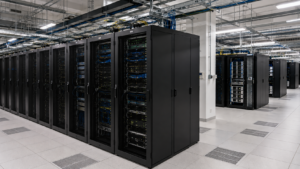
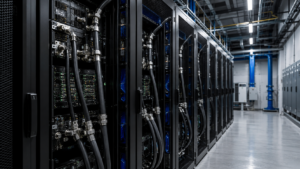
Traditional facilities handled cloud storage, enterprise software, and digital services. However, modern AI data centers support power-hungry GPU clusters that process vast amounts of information continuously. As a result, electricity consumption has increased dramatically.
Furthermore, AI model training can run for weeks or even months without interruption. Therefore, operators require consistent power availability throughout the process. This shift affects project economics. Higher energy consumption increases operating costs and places greater pressure on local electricity systems. Consequently, many developers now evaluate energy strategies much earlier in the planning process than they did in the past.
The Next Generation of AI Campuses Is Operating at Utility Scale
A decade ago, most facilities consumed a relatively modest amount of electricity. Today, some proposed developments require hundreds of megawatts of capacity. In some cases, developers are planning campuses that approach gigawatt-scale demand.
Consequently, these projects resemble major industrial developments rather than conventional technology facilities. Hyperscalers continue expanding their infrastructure footprints across the United States. At the same time, competition for advanced computing capacity continues to intensify. Therefore, developers are pursuing larger projects than ever before. This trend has become a major driver of future data center power demand projections across several key regions.
Electricity Demand Is Growing Faster Than New Grid Capacity
Electricity demand can increase quickly. Grid expansion cannot. Utilities often need years to develop new generation assets, upgrade substations, or expand transmission networks. Meanwhile, developers want power much sooner.
As a result, a timing gap is emerging. New projects are entering development pipelines faster than supporting infrastructure can expand. Furthermore, many utilities must balance rising demand from multiple industries at the same time. This challenge is particularly visible in regions connected through ERCOT and PJM Interconnection. Consequently, planners increasingly view future AI infrastructure growth as a major factor influencing long-term energy requirements.
AI Infrastructure Requires Firm Power, Not Just Available Power
Not all electricity sources provide the same operational value. AI workloads require reliable power throughout the day. Therefore, operators prioritize consistency as much as capacity.
For example, interruptions can delay model training, reduce efficiency, and increase operational costs. Consequently, developers seek energy solutions that support continuous operations. This requirement has elevated the importance of firm and dispatchable power resources. Unlike intermittent generation sources, dispatchable systems can respond when demand increases. Therefore, reliability considerations are becoming a central part of infrastructure planning for many future AI data centers.
Why Natural Gas Has Become Part of the AI Infrastructure Conversation
AI growth is increasing electricity requirements across the country. However, the discussion is no longer limited to power demand alone. Industry leaders now focus on how to deliver large amounts of reliable electricity within practical timeframes.
Natural Gas Offers Dispatchable Capacity at a Scale AI Developers Need
Many energy sources contribute to the modern grid. However, not every source can respond quickly when demand changes. AI facilities operate differently from many traditional loads. They often require predictable electricity availability throughout the day and night.
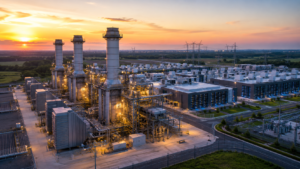
Consequently, developers increasingly evaluate resources that can provide continuous output when needed. Natural gas has become part of this conversation because operators can scale generation relatively quickly compared to many large infrastructure alternatives. Furthermore, gas-fired facilities can support changing load patterns as AI deployments expand. Therefore, many stakeholders view gas-fired power generation as a practical option for supporting future growth while additional grid infrastructure comes online.
AI Developers Are Exploring Direct Access to Power Generation
Historically, developers relied almost entirely on utility connections. Today, many organizations are reconsidering that approach. Instead, they are evaluating ways to secure greater control over future electricity supplies.
For example, some developers are exploring co-located generation assets near major campuses. Others are examining dedicated energy facilities that operate alongside computing infrastructure. This shift reflects a broader change in thinking. Electricity is no longer seen by companies as a modest utility service. Instead, they are taking more and more the view of a strategic resource. Therefore, the demand for behind-the-meter generation keeps increasing. This makes it possible to mitigate uncertainty and to adjust energy planning to the long-term infrastructure expansion plan of developers.
Utilities Are Reassessing Future Generation Portfolios
Utilities developed most of their long-term planning models on the basis of past consumption. AI is making them throw those assumptions out the window. In many areas, predicted electricity use is already running substantially ahead of past projections.
Consequently, utilities are evaluating if their current generation plans are adequate. Some suppliers are reconsidering new investments in generation assets. Others are reconsidering retirement dates on existing plants. In addition, planners must plan for demand that is yet to be known with any degree of certainty. Hence, energy infrastructure investment discussions are now being colored by artificial intelligence as a growth catalyst. This is beginning to impact utility resource planning discussions in a number of major U.S. markets.
Natural Gas Producers Are Evaluating AI as a New Demand Driver
For years, natural gas consumption discussions have largely been driven by industrials, power, and export markets. But now, demand from a new quarter is rising. The build-out of AI data centers is sparking interest throughout the energy industry.
Natural gas producers understand that large computing campuses consume a lot of electricity. So, they are watching for infrastructure announcements, utility projections, and regional growth activity. This trend is significant because an increase in sustainable growth of computing infrastructure could have an impact on future natural gas demand. In addition, producers may find ways to assist areas where technology investment is growing rapidly. Therefore, AI is an increasingly significant subject within U.S. energy market future discussions.
How AI Could Change the Future of the U.S. Natural Gas Market
The relationship between artificial intelligence & energy extends beyond electricity supply. If AI infrastructure continues expanding at its current pace, it could influence investment decisions across the broader U.S. natural gas ecosystem.
Emerging AI Hubs Could Become Major Natural Gas Demand Centers
Growth will not be uniform across every region. Developers still focus on large projects in areas with business-friendly environments, available land, and robust energy infrastructure. Therefore, some markets may grow in importance for the future energy system.
Texas is a good example. The state has a large power market, substantial energy expertise, and access to abundant natural gas supplies. And, like Louisiana, Ohio is also beginning to attract attention for its infrastructure and industrial strengths. As a result, new AI data centers in the future might drive new natural gas demand. This transformation might generate new regional growth corridors within the US and deepen ties between technology development and energy production.
Energy Procurement Models Could Shift Across the Data Center Industry
Traditional electricity purchasing may not be up to the future needs of AI infrastructure. In the past, many operators bought power through standard utility contracts. But increasing power demands are motivating groups to investigate more advanced approaches.
For instance, developers are increasingly demanding longer-term contracts that offer them more certainty in terms of pricing, supply, and potential expansion. In addition, some groups desire more transparency into the generation of electricity. As a result, sourcing decisions are increasingly linked to long-term infrastructure planning. This development may foreshadow the next round of growth in AI infrastructure, potentially forging new partnerships between utilities, energy providers, and tech firms in need of reliable capacity.
Midstream Infrastructure Could See New Investment Opportunities
Electricity generation is what gets most of the focus when talking about AI. But energy needs to flow first to where the demand is. So the infrastructure to support that infrastructure is critical in the bigger equation.
Pipelines, storage, and transportation networks transport natural gas from producing areas to consumers. If tech centers keep growing, these systems will probably need some beefing up. In addition, developers and utilities could be looking for more flexibility to accommodate future growth. As a result, investment decisions in future energy infrastructure may increasingly be informed by expectations for AI electricity demand. This pattern may affect planning discussions along the wider energy value chain.
The Industry Must Balance Growth, Reliability, and Decarbonization
The future conversation will not focus exclusively on growth. Leaders in the industry also have to meet sustainability goals, energy security needs, and reliability concerns. As a result, policy-makers have to perform a delicate balancing act.
On one hand, operators require reliable power to run sophisticated computing workloads. But on the other hand, the pursuit of emissions reductions continues across the organisation. As a result, stakeholders have to assess the role of various energy sources in achieving long-term goals. That’s the challenge shaping future discussions around gas-fired power generation and other energy technologies. In the end, the winning approaches will be those that grow the economy, that maintain reliability, and potentially advance broader sustainability priorities across the U.S.
To Sum Up
Artificial intelligence is driving one of the most dramatic changes in power consumption in decades. Unlike earlier waves of digital expansion, today’s AI data centers need massive amounts of energy, consistent reliability, and long-term capacity planning. Consequently, energy providers, developers, investors, and power companies are reevaluating how they anticipate future demand.
Natural gas has become central to this conversation, as it can be scaled up and down, run flexibly, and is reliable. As a result, increasing demands for data center power may impact generation planning, procurement, certain infrastructure investments, and regional development patterns in the future. Industry executives also have to balance reliability with sustainability.
To explore these challenges in greater depth, join industry leaders at the 8th Time-to-Power & Capacity for Data Centers Summit. It takes place on 18–19 August 2026 in Dallas, Texas. The event will convene utilities, hyperscalers, developers, energy providers, and infrastructure experts to discuss power procurement, grid capacity, future energy solutions, and the role of AI data centers in the next U.S. infrastructure growth phase. Learn more!